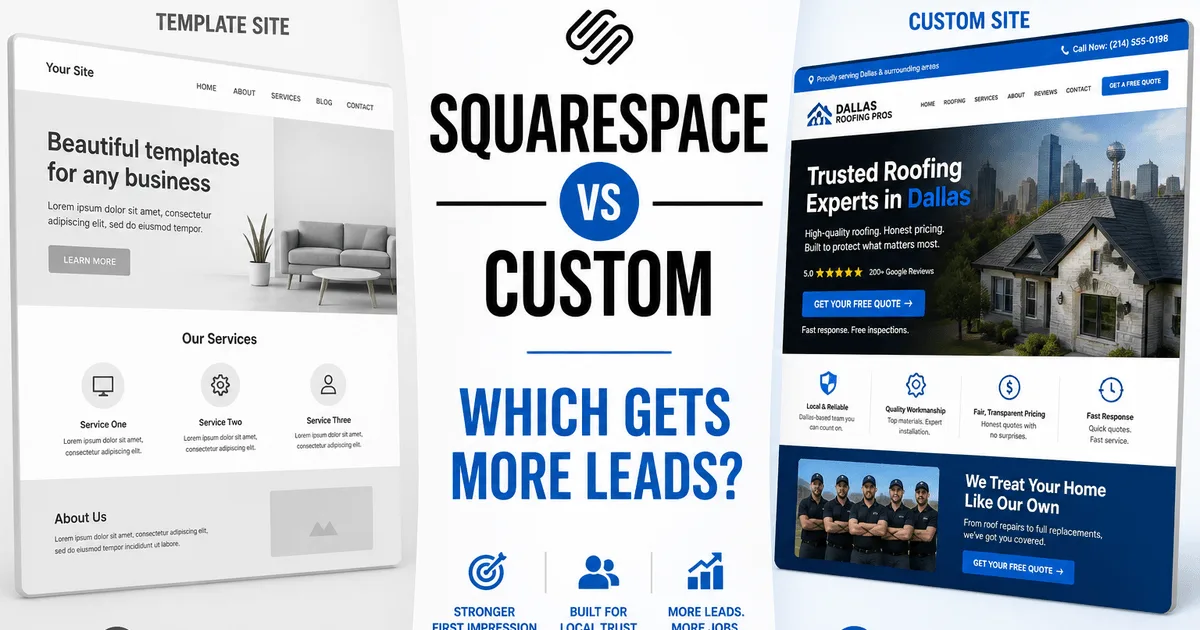
Squarespace vs Custom Website: Which Gets More Leads?
Stop losing emergency calls to slow DIY websites. Custom sites out-convert Squarespace for local trades. Capture premium leads without the tech headaches.
By George Suarez, Founder at We Got Sites
Most owners ask me the same question.
Should I use Squarespace, or should I get a custom website?
I think there's a better question. Which one gets you more leads? Which one gets better leads? Which one helps a homeowner feel confident enough to call you right now?
That matters. A lot.
I built my career in tech, SaaS, and startups. I spent years helping bigger companies grow with systems, data, and technology. Over time, one thing became obvious to me. The same tools that help larger companies win online are powerful, but most local businesses never get access to them.
That never sat right with me.
Small businesses are the backbone of the US. According to the SBA Office of Advocacy, the country now has 36.2 million small businesses. They account for almost 46% of private-sector employment. They also created about 9 out of every 10 net new jobs from March 2023 to March 2024.
So when I talk about websites, I'm not talking about some side issue. I'm talking about the digital front door for the backbone of the US, which are small businesses.
And for trades and home service companies, that front door decides a lot.
Key Takeaways
- HTTP Archive's 2025 Web Almanac reveals that Squarespace has the heaviest median mobile page weight at 3,974 KB among major CMS platforms, creating load delays that hurt local conversions.
- According to Google and SOASTA research, converting mobile sessions feature 38% fewer images than non-converting sessions, demonstrating that simpler website layouts generate more local service leads.
- BrightLocal data shows that 54% of consumers visit a local business website strictly to verify credibility and project quality immediately after reading positive online reviews.
- Local service homepages that prioritize company history over immediate services, service areas, and visual proof of work cause buyer hesitation and lose high-intent smartphone leads.
- WeGotSites custom-codes home service websites to bypass heavy drag-and-drop platform bloat, replacing traditional 3,000 to $10K upfront agency fees with a zero-risk free preview model.
The Short Answer
Here's my honest answer.
Squarespace can get you online fast. It can give you a clean-looking site. For some businesses, especially very early on, that can be enough for a moment.
But if your goal is to get more calls, more quote requests, and more serious buyers, custom usually wins.
I say "usually" because I want to be fair. A good Squarespace website can absolutely outperform a bad custom website. The platform alone does not decide the result. The real difference comes down to speed, structure, clarity, local SEO, trust, and how well the site is built around your customer.
That said, most local service businesses do better with a custom site because it gives you more control over the things that actually move leads.
Why This Matters More Than Most Owners Realize
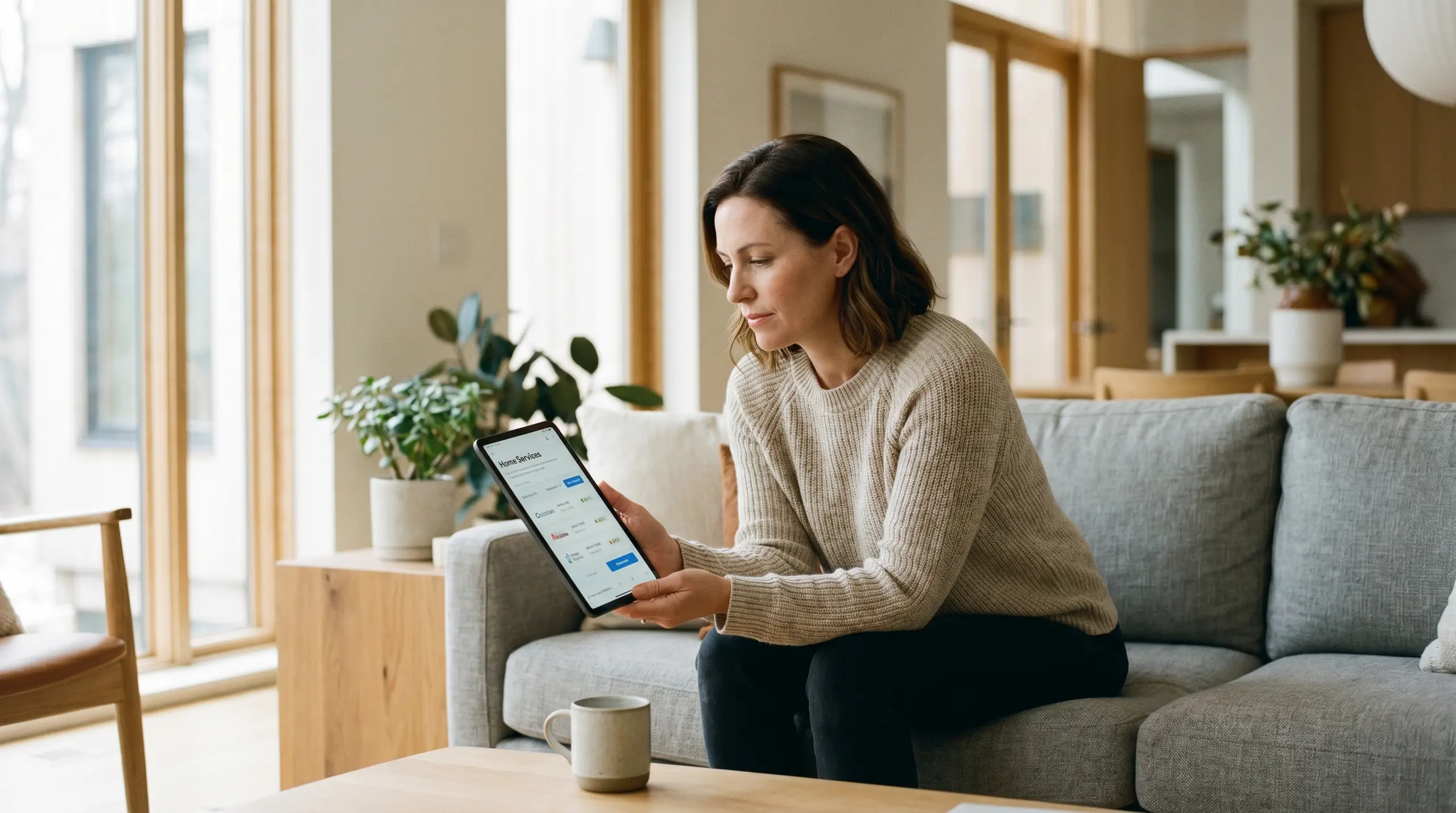
The way people buy local services changed.
A referral still matters. Reviews still matter. Your reputation still matters. But referrals no longer close the job by themselves. They trigger research.
If someone got a referral, they probably got two or three other referrals. Then they pull out their phone and start comparing.
Google/Ipsos found that 4 in 5 consumers use search engines to find local information. It also found that 88% of local searching happens on smartphones. That lines up exactly with what I see. People are in a driveway, in a kitchen, or standing outside their house with a phone in their hand.
And those searches are high intent. 18% of local smartphone searches lead to a purchase within a day. These people are not casually browsing. They are trying to solve a problem.
Reviews matter too. A lot. BrightLocal found that 97% of consumers read reviews for local businesses. Then, after reading positive reviews, 54% check the business's website.
That right there is the verification step.
Word of mouth gets you considered. Your website decides if you get chosen.
I've seen this even in my own life. When I moved to a new city, people gave me barber recommendations. I still looked those shops up online. If I couldn't find real photos showing the quality of the cuts, I didn't book. That's how people buy now. They verify.
And they do it fast. Nielsen Norman found the first 10 seconds are critical in deciding whether someone stays or leaves. Stanford's credibility study found that 46.1% of credibility comments referenced the site's design look.
So yes, the look matters. The feeling matters. The first few seconds matter. If your website doesn't match the quality of your work, buyers lose trust fast.
Where Squarespace Helps
I want to give Squarespace credit where it deserves it.
It is simple. It is accessible. It can help an owner get a website live without waiting months. If you need a basic online presence, it can do that.
And to be fair, HTTP Archive's 2025 Web Almanac showed strong mobile scores for best practices and accessibility on Squarespace. So I'm not going to sit here and act like the platform itself is automatically terrible.
The problem is what usually happens after that.
Most local service owners are not web strategists. They are not conversion experts. They are not sitting around studying how homeowners scan a page, what makes someone trust a contractor, or how Google interprets a local service business.
They are plumbers, roofers, landscapers, cleaners, electricians, and builders. They should be in the field doing what they do best.
Squarespace gives them a way to build. It does not give them a way to think like a lead-generation expert. That gap is where most of the lost revenue happens.
Where Squarespace Starts Leaking Leads
It Leads with the Wrong Message
This is the first problem I see.
A lot of Squarespace sites lead with the owner's story instead of the customer's problem. The homepage says things like "Family owned since 1998" or "Welcome to our website." Meanwhile, the homeowner is asking a much simpler question.
Can you solve my problem right now?
Your story matters. I respect it. I come from a family with limited resources, and I know how much pride owners have in what they built. But your story needs to come after the visitor understands what you do, where you do it, and how to contact you.
Clarity builds trust faster than history.
I worked with a home service client who was frustrated because traffic was coming in, but the site was not converting the way it should. I had him pull up his own website on his phone and look at it like a buyer would. Right away, he saw the issue. The homepage led with company history. It took too long to understand the service, the area, and the next step.
That hesitation was costing him jobs.
Once we moved the story lower and led with services, location, and proof of work, the quality of the calls improved. The prospects coming in were more serious. They were already sold before they called.
That's the 30-second test. A homepage needs to help people understand what you do, how you fix it, and how to get in contact with you. Fast.
It Gets Heavy on Mobile
The second issue is speed.
Squarespace is built for ease of use and drag-and-drop flexibility. That convenience comes with weight. HTTP Archive found that Squarespace had the heaviest median mobile page weight at 3,974 KB among the major CMS platforms it compared.
That matters because mobile is where local buying happens.
Google says it uses the mobile version of your site for indexing and ranking. On top of that, Google's own mobile benchmarking found that 53% of mobile visitors leave after three seconds.
Think about what that means for a local service business.
If someone has a burst pipe, a broken AC, or a roof problem after a storm, they are not waiting around while your homepage loads. They are going to the next company.
This is why I keep things simple. Google/SOASTA found that the number of page elements was the strongest predictor of conversions. It also found that converting sessions had 38% fewer images than sessions that did not convert.
Sometimes websites that are over-engineered hurt you more than they help you. A complex website makes you think. A simple website helps you decide.
It Gives You Freedom Without Guardrails

A lot of owners think editing freedom is the win.
At first, that sounds great. You can move sections around. Add more pages. Drop in another gallery. Rewrite the headline. Add a pop-up. Add a slider. Add more text.
Then real life kicks in.
A new service gets added. Someone uploads giant photos. A cousin edits the copy. The mobile layout starts looking off. The call button ends up buried. The message gets broader and weaker. The site still exists, but it stops doing its job.
This is one reason DIY websites fail slowly. Nothing looks fully broken. But everything works worse than it should.
And there's another cost people miss. Your time.
Most owners I talk to get home exhausted. They want to spend time with their families. They do not want to sit there learning platforms, resizing photos, fixing mobile spacing, or trying to understand hosting, domains, and SSL. A domain is your identity online. Hosting puts that name online so people can find you. SSL keeps the site secure. You should not be burning your evening learning that stuff.
That time should be spent on sales, operations, jobs, or home life.
It Attracts the Wrong Kind of Lead
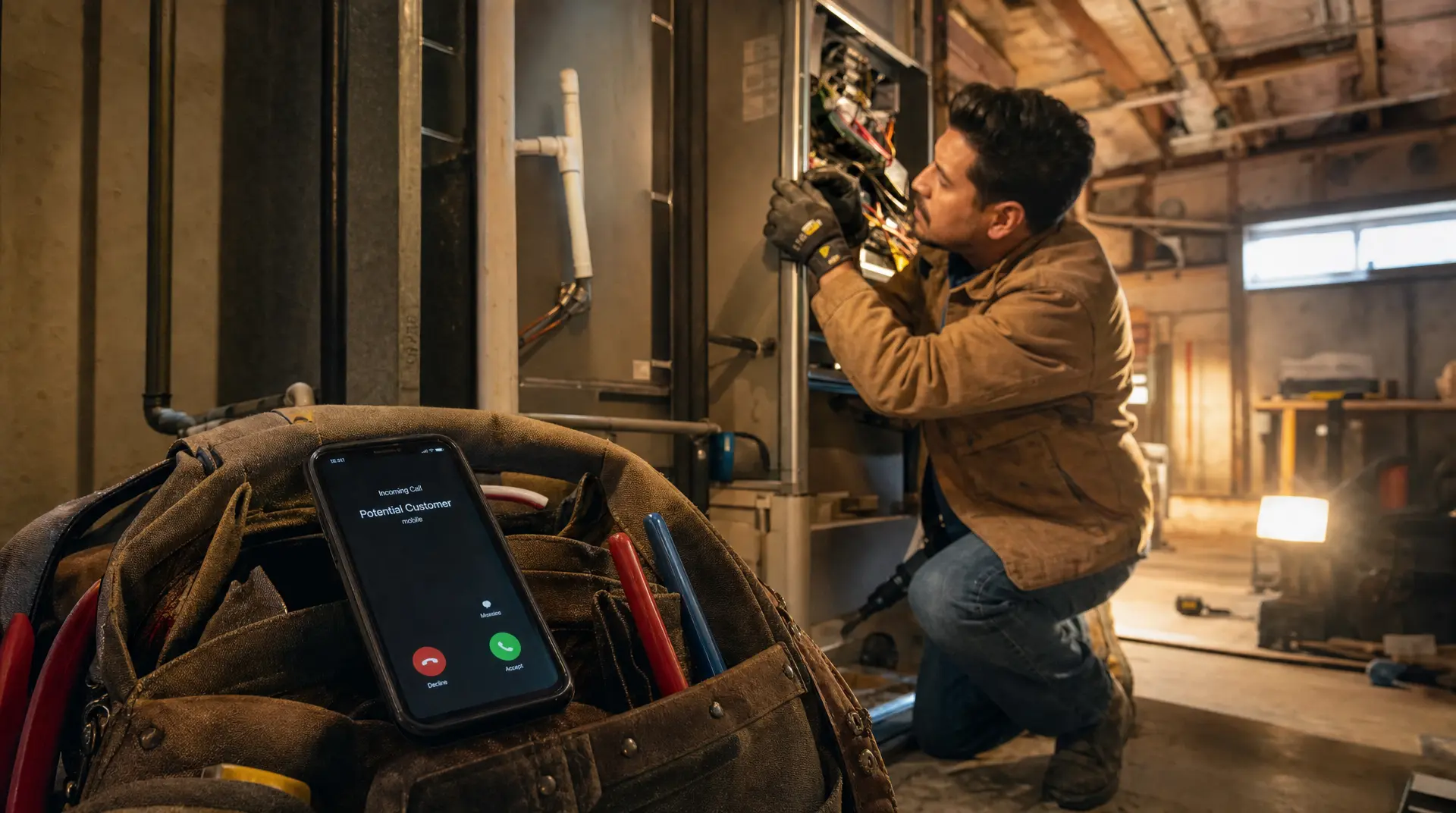
This part matters more than people realize.
Your website does not just attract leads. It filters them.
A weak site brings in more doubt. More price shoppers. More people comparing you to five other options. More people asking who is cheapest.
A stronger site builds confidence earlier. And premium homeowners don't choose the best contractors, they choose the one they feel most confident hiring.
I've seen this directly. One local home service business had a weak digital presence that was not reflecting the actual quality of the company. We rebuilt the site with premium positioning, clear messaging, and real proof of the work. After that, they started getting larger project sizes, faster close rates, and better-quality leads. The conversation changed. People stopped asking for the cheapest option.
That is what a better site does. Same business. Different presentation. Different outcome.
Why Custom Websites Win More Often
They Are Built Around the Buyer
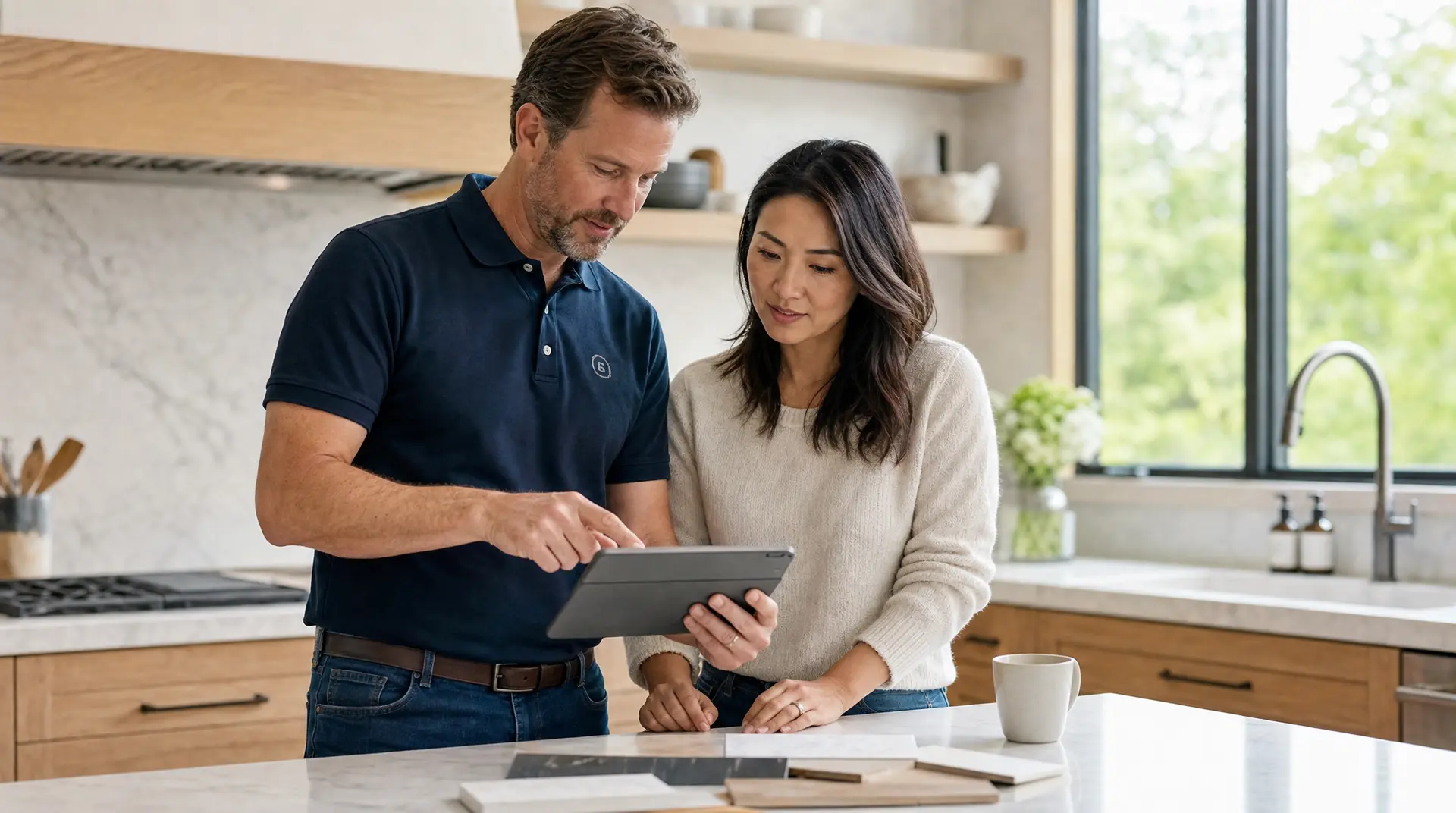
When I say custom, I'm talking about a website built around how your ideal customer makes decisions.
The first screen should tell people exactly what you do and where you do it. Then it should show the outcome. Then real proof. Then a clear next step.
For a roofer, I want real project photos. For a plumber, I want the area served, the emergency help offered, and a number someone can tap immediately. For a remodeler, I want before-and-after work, the type of projects taken on, and proof that the company can handle a premium job.
Stock photos do not help here. Handshake photos do not help here. Generic copy like "quality service" or "experienced team" does not help here. Show proof, not promises.
The user experience is more important in my opinion than the user interface. Of course I want the site to look good. But I care more about what the person does next. Can they trust you? Can they contact you? Can they decide without friction?
That's why I build with a contact-first design philosophy. If a homeowner is on their phone, I want call, text, or form options right away. If the owner is busy on a jobsite, I want the lead captured so they can follow up on their own time. Sometimes people just want to talk to people, which is why I'm careful with chatbots for local service businesses. In emergency situations, human connection still wins.
They Give You More Control Over Google and Trust
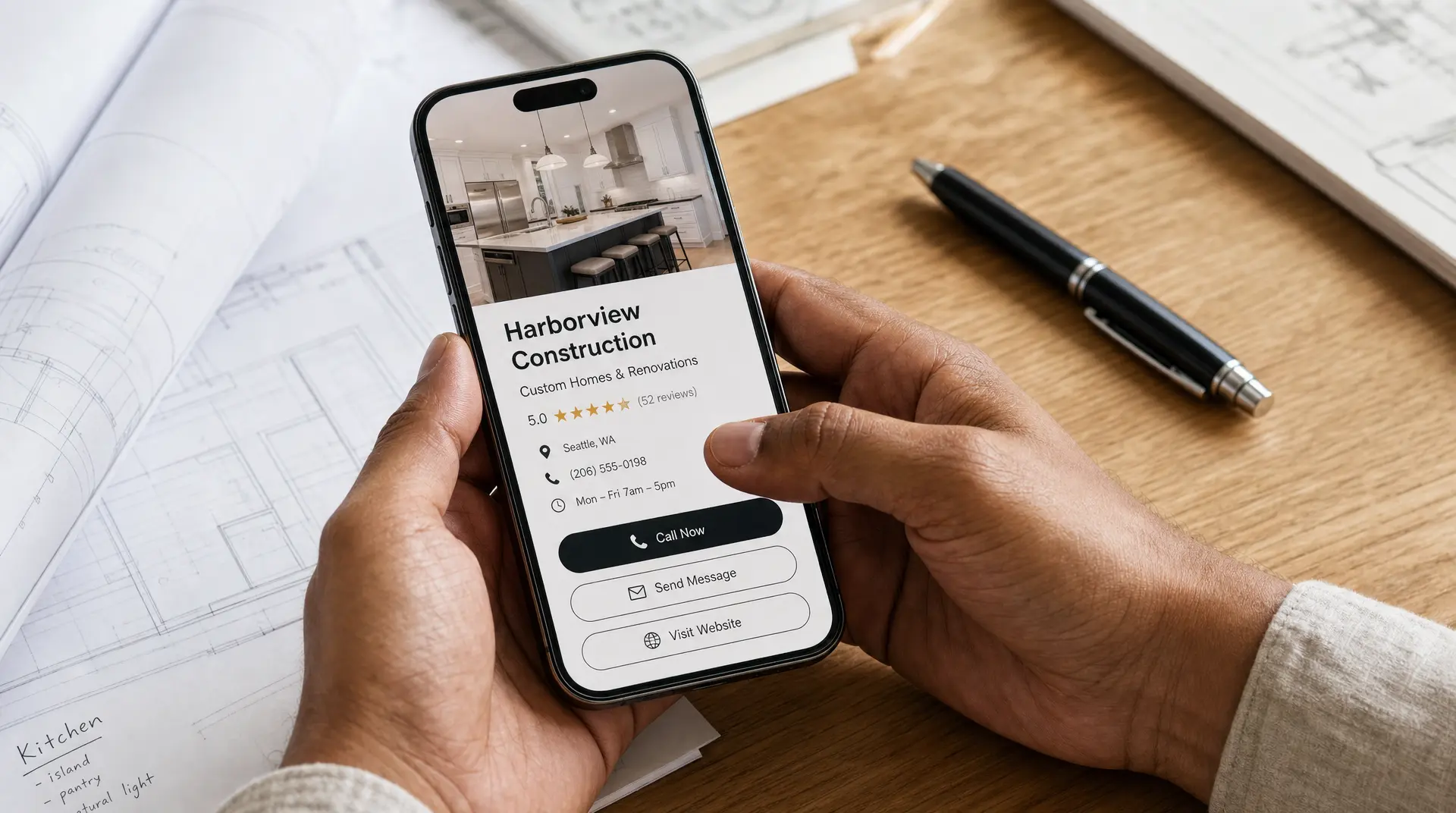
A custom site also gives you more control over local search.
Google says local rankings are mainly driven by relevance, distance, and prominence. It also says that complete and accurate information makes a business more likely to show up, and that more positive reviews can help local ranking.
That's why I focus on the fundamentals. Service-plus-city pages. Clean Name, Address, and Phone data. Google Business Profile optimization. Real reviews. A fast, simple site. Google isn't hiding your business. It just doesn't understand it still.
Reviews are part of that system too. BrightLocal found that 47% of consumers won't use a business with fewer than 20 reviews. It also found that 74% care about reviews written in the last three months.
So yes, get reviews. I tell clients to ask right after the job is done, while the experience is fresh. A simple card with a QR code works well. If it fits the business, offer a small discount on the next service. Keep it organic. Keep it real.
And once those reviews bring people to your website, the site still has to close the deal.
They Keep Working After Launch
One of the biggest differences between Squarespace and a strong custom setup is what happens after launch.
A website should be a living sales tool. It should keep evolving as the business grows. New photos come in. New neighborhoods become a target. New reviews need to be added. Headlines need to get sharper. Offers change. Service pages get expanded.
A site that gets launched and ignored starts leaking value.
That is why I built WeGotSites the way I did. I wanted to bring in that enterprise feeling for these small businesses without forcing them into the normal agency model. We custom-code our sites because I want more control over speed, performance, and changes. We remove hidden bloat. We keep things simple. We handle updates so owners do not have to fight with a platform.
Most of our clients just send us text and photo updates. We handle the rest. That helps them do what they do best and allows us to highlight what they do best.
Risk matters too. Traditional agencies often charge $3,000 to $10,000 up front, then add monthly fees. For a family-owned business, that money can affect payroll, equipment, groceries, or tuition. The hesitation usually is not about being cheap. It's about the risk. Family businesses do not make decisions based on price alone. They think about timing, cash flow, and whether they can afford to be wrong.
That is why I remove the upfront risk. We build a free preview before a client pays. If they like it, we launch. If they don't, they owe nothing. No contracts either. I want to earn the business every month.
And when owners see their real business on a live screen, the fear drops fast. I've seen that conversation move from hesitation to "when can we start?"
Tony, who works in roofing, said it better than I could: "I paid $3,000 for my old site. This looks better and costs $99." Sarah, from a cleaning business, said, "I was live in 48 hours. George made everything simple."
That is the whole goal for me. Making technology and resources accessible for everyone, without feeling like their whole wallet's on the line.
How I Tell Owners to Make the Choice

If you only need a basic online presence right now, Squarespace can hold that spot. I'm not against tools that help people get started.
But if you want your site consistently selling for you 24/7, custom is the stronger move.
And if you hire anyone to do it, ask better questions. Ask where the customization actually happens in their process. Ask to see recent websites they built for businesses like yours and have them explain the differences. Ask what happens if conversion is weak after launch. Ask who owns the domain. Ask whether you can leave if the service stops helping you.
Those answers will tell you fast whether you are dealing with a real partner or someone selling you a dressed-up template.
My Final Take

For most trades and home service businesses, custom websites get more leads.
More important, they get better leads.
They give you faster load times, clearer messaging, better mobile performance, stronger trust, better local SEO signals, and a cleaner path to call, text, or book. They help you look bigger. They help you look better in Google's eyes. And they help you stop competing on price every single time.
Squarespace can get you online.
A custom website, built the right way, can help you get chosen.
That's the difference I care about.
Frequently Asked Questions
How do I capture leads on a custom site when I am busy on a job site?
When you're busy, your site must capture the lead. We integrate mobile-first forms and tap-to-text buttons. 50% of local smartphone searchers take action within a day. If a homeowner with a burst pipe can't request a quote instantly, they will hire the next plumber.
Why does my current DIY Squarespace website load so slowly on mobile?
Drag-and-drop builders trade speed for convenience. Squarespace has the heaviest mobile page weight at 3,974 KB. That code bloat kills conversions. Google reports 53% of mobile visitors leave if a site takes over three seconds to load. Custom builds strip that dead weight.
Can I still update my project photos without logging into a website builder?
Yes, and you absolutely should. The whole point of a done-for-you digital partner is eliminating your tech burden. Instead of fighting with a platform late at night, just send a quick text with your latest job site photos. We handle the formatting and live updates immediately.
Will a custom website help me charge premium prices better than a template?
Absolutely. Homeowners judge your craftsmanship by your digital front door. A Stanford study found that 46.1% of credibility decisions rely on visual design. If your site looks cheap, prospects expect cheap pricing. A custom site builds instant trust and filters out budget-shoppers before your phone rings.
Do I need to pay a traditional agency thousands for a good custom website?
No, and you shouldn't. Traditional agencies charge massive upfront fees and load sites with gimmicks. Family businesses cannot risk their cash flow on a guess. We build a free preview first. You get a fast, custom-coded site with zero upfront risk, paying only if you love it.