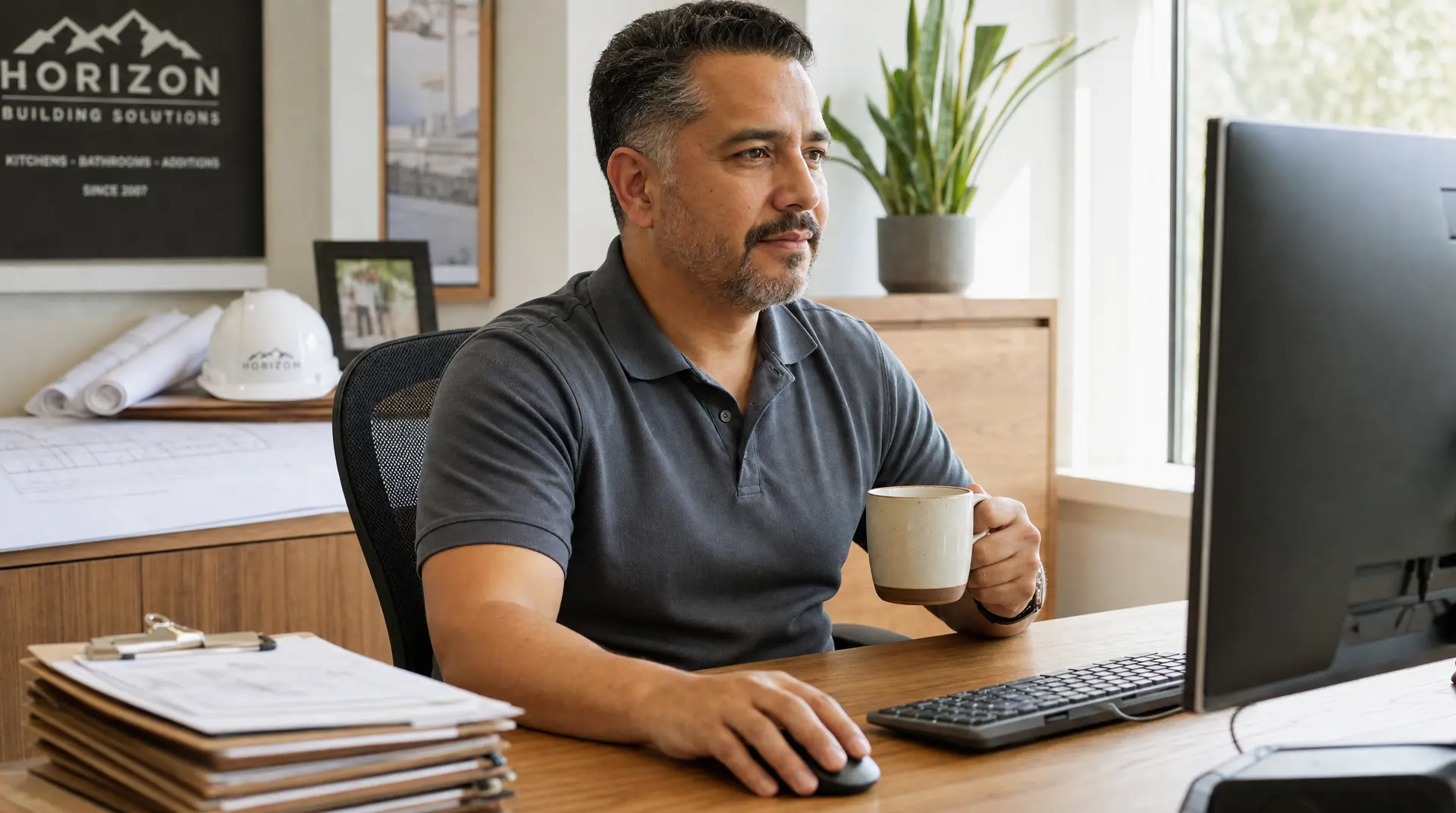
Look Like a Bigger Business Online (Without the Agency)
Stop losing jobs to inferior competitors. Get a custom, done-for-you trades website for $99/mo. Zero upfront cost. We handle the tech so you can work.
By George Suarez, Founder at We Got Sites
I'm going to keep this simple.
If your website makes your business look smaller than you really are, it is costing you work. Quietly. Most owners never see the exact dollar amount. They just feel it. More price shoppers. More ghosting. More jobs going to competitors who are not better at the work. They just look easier to trust online.
I've spent years in tech, SaaS, and AI helping bigger companies grow with systems, data, and technology. What that taught me is pretty clear. The same digital advantages that help larger companies win can help local businesses too. The problem is access. A lot of small businesses were never given a fair path to use those tools.
And small businesses matter more than people realize. The U.S. has 36.2 million small businesses. They make up 99.9% of all U.S. businesses. They also support almost 46% of private-sector employment. So when I say small businesses are the backbone of the US, which are small businesses, I mean that literally.
The biggest challenge lines up with what I hear every day. In the Federal Reserve's survey, reaching customers and growing sales was the most common operational problem for small employer firms.
That mission is personal for me. I grew up in a family without a lot of resources. I had to work harder for opportunities that people just wake up with. I also come from a family of small business owners, so I know what it means when a bad investment cuts into payroll, groceries, or tuition. An extra few clients a month can change a lot for a family business.
I'm not the person who should tell you how to run a better landscaping route or fix a burst pipe. You're the expert there. I'm the person who can help more people find you, trust you, and book you.
Key Takeaways
- Local service websites that prioritize historical company narratives over immediate service and location details experience higher buyer hesitation and attract more price shoppers.
- Stanford research indicates that 46.1% of consumers evaluate a business's credibility directly through website design elements like layout, spacing, and typography.
- Mobile website bounce risk increases by 32% when load times slow from one to three seconds, heavily penalizing local businesses using unoptimized drag-and-drop site builders.
- Offering local service businesses a free, personalized website preview before requiring payment achieves a 90% conversion rate for WeGotSites by eliminating upfront financial risk.
- The WeGotSites platform replaces traditional high-cost agency builds with custom-coded local business websites managed through a $99 to $199 monthly subscription requiring zero upfront capital.
- Despite the effectiveness of word-of-mouth marketing, 54% of consumers still visit a local business's website after reading positive reviews before deciding to book a service.
Word of Mouth Gets You Considered
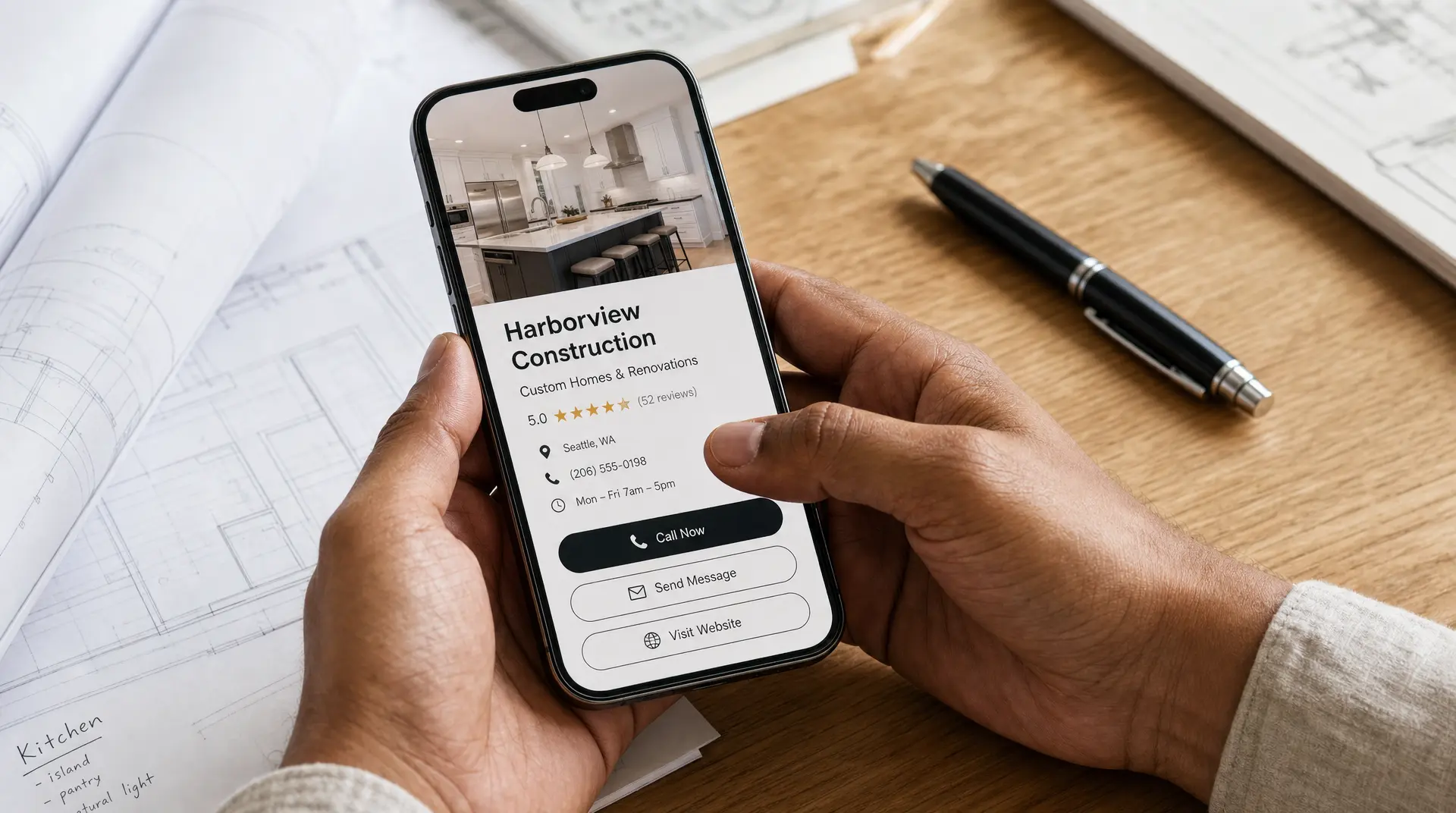
If you've built your business on word of mouth, that is a good thing. I always tell owners that first. It proves you do great work. But referrals work differently now than they used to.
Today, the referral is the start. Then comes the research.
BrightLocal found that 97% of consumers read reviews for local businesses. After reading positive reviews, 54% visit the business's website. And 66% do more research before they book or buy.
I've seen that behavior in my own life. When I moved to a new city, friends gave me barber recommendations. I still skipped some of them because I couldn't find clear photos online that showed the quality of the cuts. The referral got them on my radar. The missing proof kept me from booking.
That is what happens to local service businesses every day. Word of mouth opens the door, but your digital presence is what gets you chosen. If someone hears your name and then can't quickly find a site that feels clear, active, and trustworthy, you essentially become invisible.
I've seen companies that have been around for 20 years lose work to companies that have been around for six months just because the newer company has a cleaner, more confident website.
Your Website Has to Pass the 30-Second Test
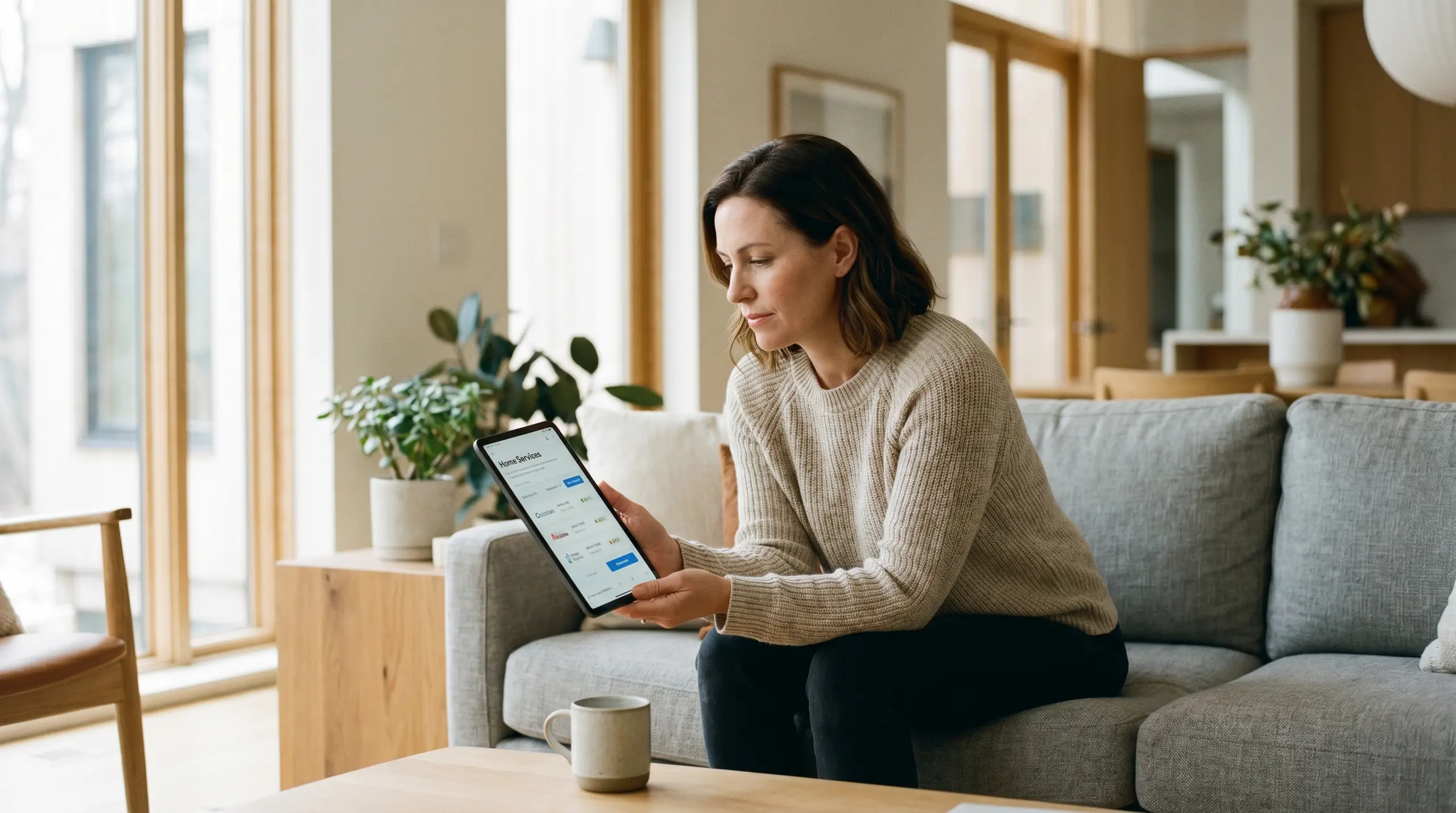
A local business homepage has one job in the first few seconds. It needs to clearly answer what you do, where you do it, and how someone can contact you. Fast. If that is not obvious right away, hesitation shows up. And hesitation kills action.
I build sites around a simple flow. First, the customer wants to know, can you help me? Then they want to know, do I trust you? Then they want to know, what do I do next? That is the order that matters.
The look of the site matters more than a lot of owners think. Stanford found that 46.1% of consumers judged a website's credibility partly by its design look. That means layout, spacing, fonts, colors, and overall feel are shaping trust before someone reads deeply. If your site feels cheap, cluttered, or outdated, buyers start asking themselves, if the website looks like this, what about the service?
This is where a lot of family businesses accidentally hurt themselves. They lead with "Family owned since 1998" or a long story about the company. I respect that history. But the homeowner still has one question in their head. Can you solve my problem right now?
I've literally sat with a home service owner and had him search his own site on his phone like a real customer would. Within those first couple seconds, the vague headline and the family-history intro created just enough pause to lose trust. Once we moved the story lower and led with the service, the location, and real proof, the quality of leads changed. The price shoppers dropped off. The people calling were far more ready to move.
Clarity builds trust faster than history. Your story matters. It just needs to come after you've earned the attention.
Real proof matters here too. Use real job photos. Use before-and-after images. Use testimonials with real names when you can. Show the level of work you do. Stock photos of smiling people or handshakes do not help a local service business. Homeowners are scanning your site for signs that you are real, active, and safe to hire.
Mobile, Speed, and Contact Win Jobs
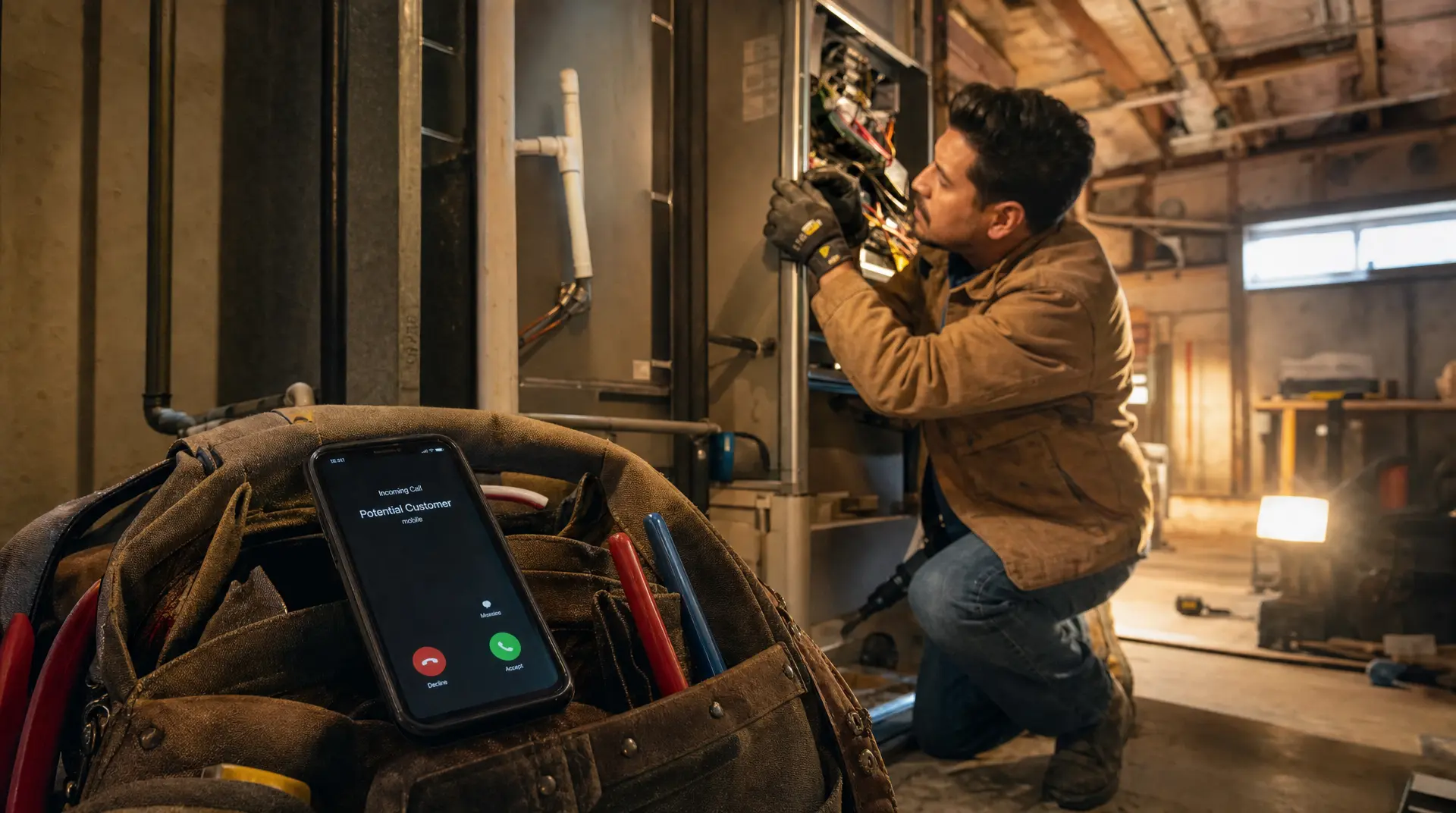
Your customer is usually on a phone. 91% of U.S. adults own a smartphone. Google found that 76% of people who do a local search on a smartphone visit a related business within a day. And 28% of those searches result in a purchase.
That is why I care so much about mobile-first design.
If someone has a broken AC, a plumbing issue, or needs a quote while standing in their driveway, they are not going to study your website like a brochure. They want to know if you serve their area, if you handle the issue, and how to reach you right now. That is why I use a contact-first design philosophy. Call buttons, text buttons, and clear quote forms need to show up immediately.
Speed matters just as much. Google reported that bounce risk jumps 32% when load time goes from 1 second to 3 seconds. I see this all the time with DIY and drag-and-drop sites. The page looks decent at first glance, but it loads like a brick because of hidden bloat, oversized images, heavy templates, or too many visual effects.
I keep things simple on purpose. I compress images hard. I limit fonts. I remove animations that slow the page down and add nothing. Sometimes websites that are over-engineered hurt you more than they help you. Speed isn't a technical detail. It's the difference between a homeowner staying, leaving, or calling your competitor.
Poor online experience costs trust too. PwC found that 29% of consumers stopped using a brand because of poor customer experience online or in person. That tracks with what I see. If there is friction, there are lost customers.
And I'm careful with chatbots on local service sites. In urgent situations, people want answers from a human. Sometimes people just want to talk to people. If you can't answer every call because you're on the job, your site still needs to capture the lead with a clean form. And if you need more help, we offer a product that can answer calls and book appointments on your behalf.
Your Website Chooses Your Customers
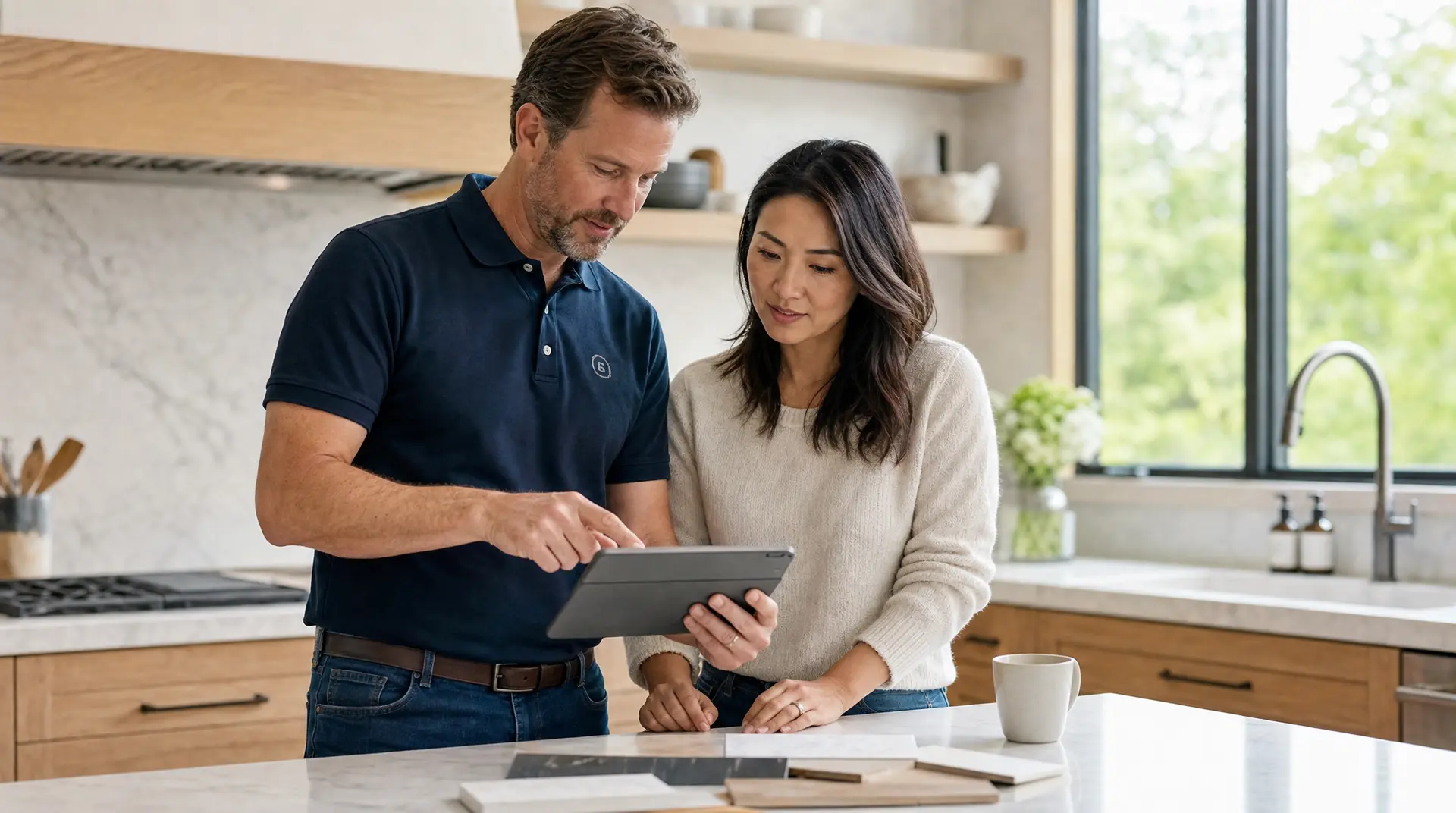
A lot of owners think a website just brings in more leads. It does more than that. It decides what kind of leads you hear from.
A cheap-feeling site attracts more cheap conversations. More price shopping. More people comparing five bids and choosing the lowest one. A stronger site attracts better jobs, better trust, and better conversations. I've seen the question change from "Are you the cheapest?" to "When can you start?" once the website finally matched the quality of the work.
That matters because high-paying homeowners think differently, search differently, and choose differently. They are not reading every word logically. They are scanning for confidence. I sat with a homeowner once who looked up a highly recommended contractor for a high-ticket project. He looked at the site for a few seconds and said, "If I'm spending this much, I just want to feel sure." That line stuck with me.
That is how premium buyers act. They want confidence, not bargains.
So I push owners to speak about outcomes, not just services. Show the finished result. Show the quality of the craftsmanship. Be specific about what you specialize in and where you work. A specialist usually feels safer than a generalist who says they do everything. Small companies win online through precision. High intent beats high budget.
Google works the same way. Google isn't hiding your business. It just doesn't understand it still. When your site clearly says the service you offer, the city you serve, and why people can trust you, you look better in Google's eyes.
Reviews are a big part of that. BrightLocal found that 47% of consumers won't use a business with fewer than 20 reviews. It also found that 80% of consumers are likely to use a business that responds to all reviews. So yes, volume matters. Recency matters. Responding matters.
The cleanest way to get more reviews is simple. Ask for an honest review right after the job while the experience is still fresh. A small QR code card works well because it makes the ask easy. Keep it organic and real. Google says businesses may not offer incentives for posting a review, so I stay away from discounts or giveaways for reviews.
I also tell owners not to rely only on Instagram. Put your before-and-after photos on Google too, with real captions about the work and the city. That helps customers find you, and it helps Google understand you.
Why Owners Get Stuck

The Upfront Risk Problem

Some agencies do amazing work. I want to be fair about that. For a bigger company with bigger revenue, a premium agency build can make sense. My issue is that the standard agency model is a bad fit for a lot of local businesses.
A lot of small businesses are already protecting cash flow. The Federal Reserve found that 60% of small employer firms applied for financing in the prior year. Only 42% received the full amount they sought. And 22% received none.
So when a family business pauses at a $4,000 or $8,000 website bill, I understand it. The hesitation is about risk. They depend on that money to survive, to put food on the table, to pay for payroll, to handle equipment, to keep the business moving.
If you talk to an agency, ask where the customization actually happens in their process. Ask who owns the domain. Ask what happens if conversion is weak after launch. Then look at the portfolio and mentally strip away the logos and colors. If every site still feels the same, you are probably looking at a dressed-up template.
The DIY and "My Nephew Built This" Cycle
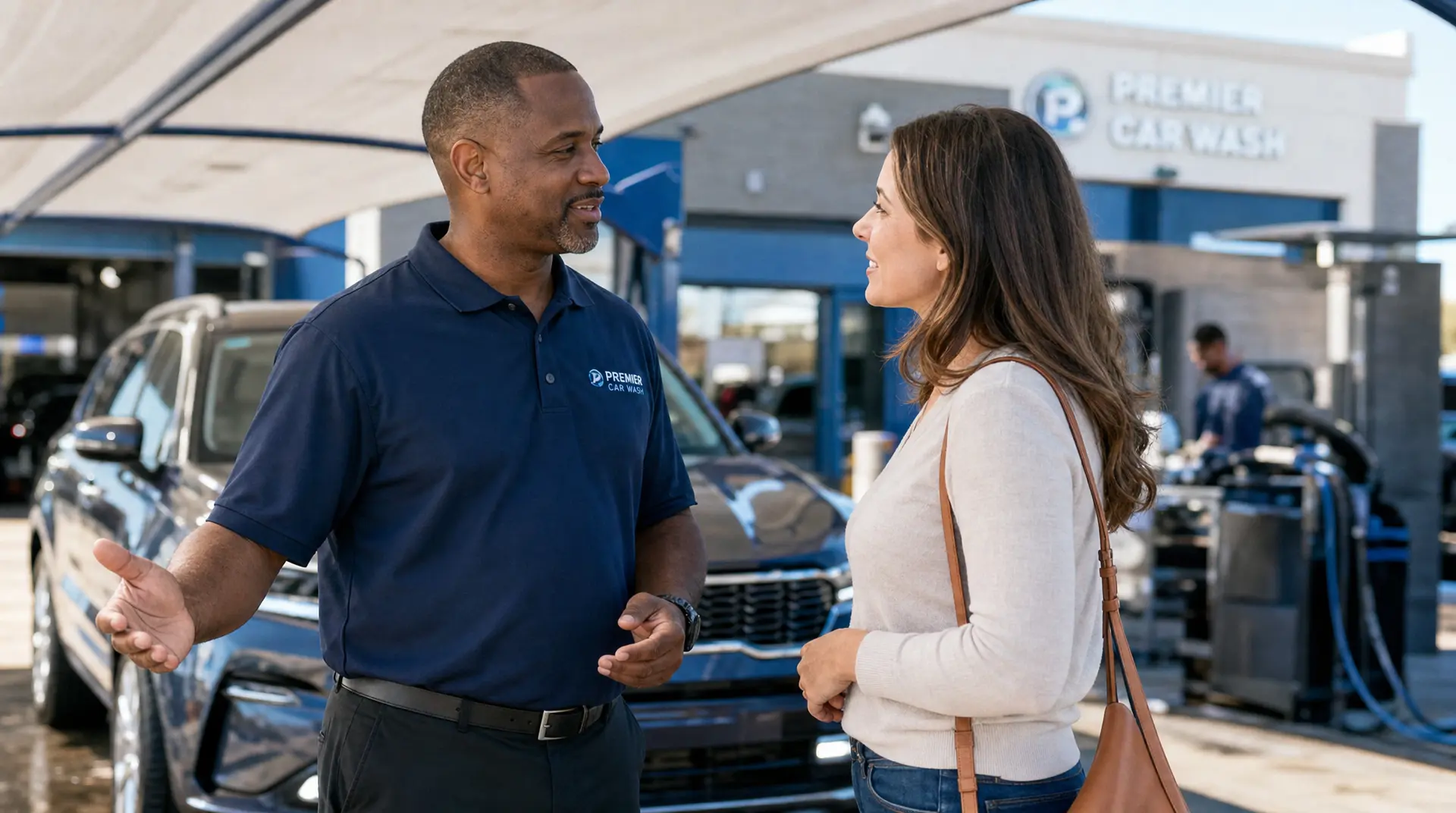
Then there is the other trap. DIY platforms. Or the line I hear all the time: my nephew built this website for me.
If it hasn't been built in the last six months, it probably isn't getting built next month either. And even when it does go live, the bigger issue is usually conversion. The site may exist, but it is often built more for the owner than for the customer. It has words on a page, but it does not walk the buyer through a journey.
I won a car wash customer after they had spent five years stuck with an outdated website built by a nephew. The owner was locked out of it, and the site was actively devaluing the brand. We rebuilt it from scratch and removed all the upfront risk. That gave them a real path forward.
That story is more common than people think. Owners try to save money up front. Then they pay for it in missed opportunities, wasted hours, and weaker trust. Tony, one of our roofing customers, said it perfectly: "I paid $3,000 for my old site. This looks better and costs $99."
Why I Built WeGotSites This Way
I built WeGotSites to bring in that enterprise feeling for these small businesses without feeling like their whole wallet's on the line. My goal is simple. Help them do what they do best and allow us to highlight what they do best.
So I removed the upfront risk. We charge a monthly subscription from $99 to $199. There is zero upfront cost. There are no contracts. You can cancel anytime. I want to earn your business every month.
Before anyone pays, we build a free website preview and walk through it on a short call. That changes the whole conversation. The owner is no longer guessing what they might get. They are looking at a real custom website built around their business. That preview process converts at roughly 90% for us because it is personalized and it removes fear.
We custom-code our sites because I want more control over speed, structure, and cost. I do not want to give you a copy-and-paste solution. I want a site that is optimized to convert for your ideal customer. We also handle the domain, hosting, SSL, daily backups, and uptime. In plain English, your domain is your name online, hosting puts that name online so people can find you, and SSL is what helps keep it secure.
If you already have pages ranking on Google, we protect that too. We recreate those pages and redirect traffic correctly so you do not lose the visibility you already earned.
I also believe a website should be a living sales tool. That is why we include unlimited text and photo updates. If you finish a job and want fresh photos added, send a text, an email, or a voice note. We take care of it. You should not have to get home exhausted and spend your night inside a website builder. On higher tiers, we can also help with branded business email, which makes the company look more established every time you reply.
Behind the scenes, my team is specialized. We have developers watching uptime and separate people handling communication. We also adapt to how owners actually work. Some want a call. Some want texts. Some send voice notes from the truck. We work with that.
And the feedback tells me we built the model the right way. Sarah, a cleaning business owner, said, "I was live in 48 hours. George made everything simple." Rachel said, "Clients think I hired an agency. Best $99 I ever spent." That is exactly the point.
Final Thought
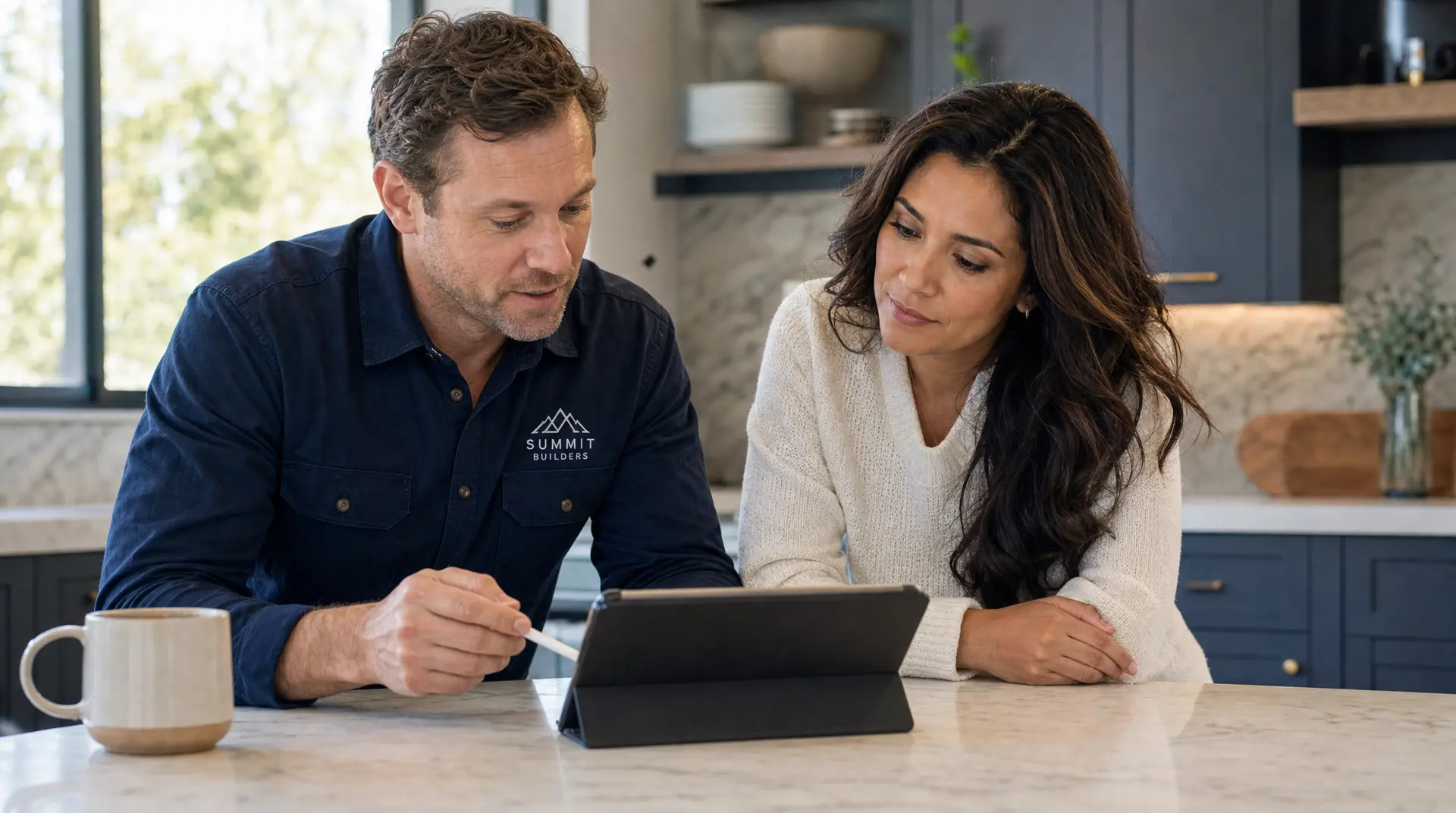
You do not need to become a web designer. You do not need to become an SEO expert. You do not need AI literacy just to keep up. You need a website that clearly explains what you do, shows proof of the work, loads fast on a phone, and makes it easy for someone to call, text, or book.
That is how you look like a bigger business online.
You look clear. You look trustworthy. You look easy to choose.
For me, this is bigger than design. Small businesses deserve a chance to win. If I can help a local business get a few more of the right calls every month without forcing them into a risky upfront bet, that matters. That helps the owner, the family, and the community. That is why I built WeGotSites.
Frequently Asked Questions
How do I compete online against giant franchises?
You out-trust them. Franchises look generic. You win with real local proof. Since 76% of local mobile searchers visit a business within a day, a fast site showing actual job photos in their exact neighborhood instantly makes you look like the premium choice.
What makes a local website look cheap to high-end buyers?
Clutter and stock photos kill trust. Stanford found 46.1% of consumers judge credibility based on design. If your site uses cheesy handshake photos, premium buyers assume your craftsmanship is sloppy. Clean layouts with real before-and-after photos make you look established.
Should I hide my home address online if I don't have a commercial shop?
Yes, if you run trucks from home, hide the physical address. Instead, list a clear service area highlighting the exact cities you cover. This makes you look like a bigger, wider-reaching business online rather than a one-truck operation parked in a driveway. We handle this for you.
Do I need a fancy custom logo to look like a bigger business?
No. You just need a clean font for your name. What actually costs you money is a bad experience - 29% of consumers abandon brands due to poor online UX. We focus heavily on clear contact forms and lightning-fast speed rather than expensive, unnecessary graphics that slow down your site.
Can I just use a Facebook page instead of building a real website?
Social media is great for updates, but it doesn't close emergency jobs. Moreover, 54% of consumers visit a website after reading positive reviews. A dedicated, fast-loading site is what actually converts that passing interest into a scheduled quote when a homeowner is ready to buy.