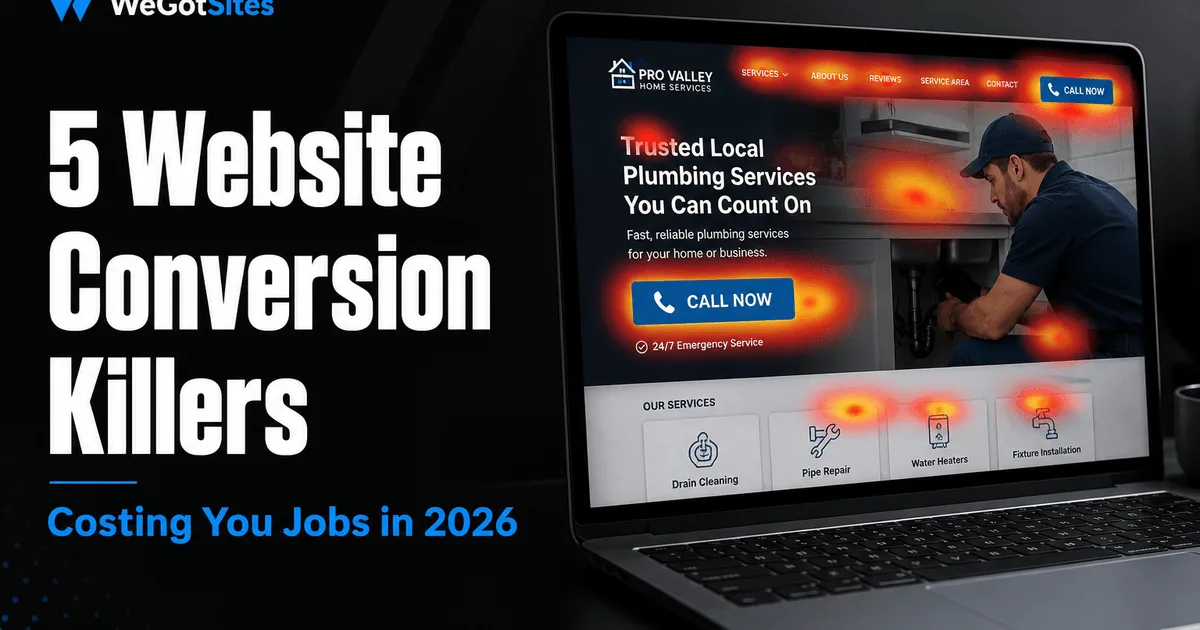
5 Website Conversion Killers Costing You Jobs (2026)
Stop losing referrals to a broken DIY website. Fix the 5 hidden conversion killers costing your trades business high-paying emergency leads and revenue.
By George Suarez, Founder at We Got Sites
If you're getting referrals but not getting the job, your website is usually where it breaks.
The referral gets you considered. Your online presence decides if you get chosen.
I've spent most of my career around tech, SaaS, AI, and growth systems. Then I made a very intentional shift. I started focusing on local service businesses, because that is the backbone of the US, and a lot of them are getting left behind online for no good reason.
The SBA's 2025 profile shows there are 36.2 million small businesses in this country. They make up 99.9% of all U.S. businesses and employ 62.3 million people. In construction, 99.8% of employers are small businesses. Small businesses also added 1.2 million net jobs in a single year.
So when a plumber, contractor, landscaper, or electrician loses work because of a weak website, I take that seriously. A few extra jobs a month can change a family's whole situation. That can mean bills getting paid on time. It can mean better equipment. It can mean more room to breathe.
This is personal for me too. I grew up in a family without a lot of resources. I know what it feels like when every business decision carries weight. That's a big reason I built WeGotSites the way I did. I wanted to make technology and resources accessible for everyone, without feeling like their whole wallet's on the line.
And the market is moving fast. Word of mouth still matters. Of course it does. But in 2026, referrals trigger research. Google and Ipsos found that 4 in 5 consumers use search engines to find local information. Think with Google found that 76% visit within a day after searching on a smartphone for something nearby.
People move fast. They compare fast. They decide fast.
Most business owners do not care about page counts, design awards, or fancy features. They care about calls, leads, and revenue. That's exactly how I look at websites too. A website should help more good customers trust you fast, contact you fast, and book fast.
Here are the five conversion killers I see costing local businesses real jobs.
Key Takeaways
- A drop in website conversion rate from 5% to 1% for a local business averaging 1,000 monthly visitors at $500 per job creates a $20,000 monthly revenue loss.
- Google and SOASTA research demonstrates that expanding a mobile web page from 400 to 6,000 elements decreases a site's conversion probability by 95%.
- According to BrightLocal's 2026 survey, 97% of consumers read local business reviews, and 83% of customers will leave a review if the business explicitly asks.
- Google and Oxera data reveals that local business listings featuring authentic photos generate 42% more direction requests and 35% more homepage clicks.
- Moving legacy messaging like family history below concrete service offerings, coverage areas, and proof of work directly improves lead quality and filters out price shoppers.
- Automated chatbots actively deter stressed homeowners during emergency searches for burst pipes or broken air conditioning units unless a human agent responds immediately.
1. Your Homepage Creates Confusion

Your homepage has to pass the 30-second test.
When somebody lands on it, they are asking three things right away. What do you do? Do you serve my area? How do I contact you? That whole decision starts in seconds, especially on a phone.
I see a lot of home service websites open with lines like "Family Owned Since 1998" or "Welcome to Our Website." I respect the history. I really do. A lot of owners are proud of what they built, and they should be. But the customer is thinking about their problem first. They want to know if you can solve it right now.
Clarity builds trust faster than history.
I worked with a family-owned service business whose homepage led with their story. Once we moved that lower and put the services, service area, and proof of work up top, the quality of the leads improved. The time-wasting price shoppers started to fade. The people calling were already sold before they even picked up the phone.
That's how the flow should work. First, make it easy for the buyer to understand what you do. Then show them why you're better. Then tell them what to do next. Your story still matters. It just works better after you earn the attention.
A strong homepage says the service and the location clearly. Then it gives the outcome. Then it shows real proof. Then it makes the next step obvious. Call. Text. Request a quote. Simple.
If your homepage creates even a short pause, you're leaking jobs. That pause matters. People are not studying your site. They are scanning it for a feeling. They want confidence. They want to feel safe hiring you. They want to feel like you can solve the problem without drama.
That is why generic greetings and legacy-first headlines hurt more than most owners realize. The customer still does not know if you help people like them. Until they know that, everything else is noise.
2. Your Mobile Site Is Slow and Overloaded

A lot of owners still underestimate mobile.
Think with Google found that more than half of overall web traffic came from smartphones and tablets, and 30% of all mobile searches were location-related. For local service businesses, that matters even more. A lot of your buyers are checking you from a phone while they are at work, in the driveway, or standing inside a house with a problem.
If your site is slow, cluttered, or confusing on mobile, you lose them.
53% leave after 3 seconds on mobile. Google and SOASTA found that when page load time rises from one second to seven seconds, bounce probability jumps 113%. They also found that when a page grows from 400 elements to 6,000, conversion probability drops 95%.
That is a huge leak.
I see this all the time with DIY platforms and drag-and-drop templates. They do what they promise. They get you online fast. Then they stop at build. They do not think about conversion, search intent, or buyer psychology. That is where the silent killer starts.
The site looks okay at a glance. Then it loads like a brick. The images are huge. There are four fonts. A slider is moving. A pop-up appears. A bunch of animations kick in. The owner thinks the website feels modern. The customer feels friction and leaves.
Sometimes websites that are over-engineered hurt you more than they help you.
This is why I keep things tight. I compress images hard. I keep sites to a maximum of two fonts. I remove pointless animations. I want the site to load fast, look clean, and make the next step obvious. The user experience is more important in my opinion than the user interface. You can absolutely have both. But if a design choice slows the buyer down, it is working against you.
I also prefer custom coding because it gives me more control over performance and structure. Still, the bigger issue is not just the platform. The bigger issue is whether the person building the site understands conversion. A pretty site on any platform can still quietly underperform.
And if you're fixing all this yourself late at night, that has a cost too. You get home, you're exhausted, and you want time with your family. You should not be wasting revenue-generating time messing with broken layouts, image sizes, or menus. That is time better spent doing the work you actually get paid for.
3. Your Website Looks Generic, so Your Business Feels Generic
This one hurts a lot of good businesses.
The work is solid. The team is good. The reputation is there. Then the website makes the whole company feel replaceable.
I see stock photos of handshakes, smiling models, generic trucks, and vague copy like "quality service" or "experienced team." That language says nothing. Those photos prove nothing. If I remove the logo and colors, the site could belong to any other company in town.
That is how businesses end up competing on price instead of value.
Real proof matters. Even on the listing side, Google and Oxera found that businesses with photos were associated with 42% more direction requests and 35% more homepage clicks. People want to see something real. They want your actual work. Your actual team. Your actual results.
I rebuilt a low-converting DIY website for a local home service business and changed the whole feel of it. We moved away from generic messaging. We showed real proof. We made the site feel premium and clear. The result was better leads, larger project sizes, and faster close rates. People stopped asking if they were the cheapest. They started asking when they could start.
That is the shift you want.
High-paying homeowners think differently, search differently, and choose differently. They are not looking for the flashiest site on earth. They are looking for the least risky decision. They want to feel sure. They want to know your presentation matches the quality of your work.
If the website doesn't match the quality of their work, buyers lose trust and faith in their quality of work.
So show proof, not promises. Use before-and-after photos. Use real testimonials with real names when you can. Talk about outcomes. Talk about the finished kitchen, the solved plumbing issue, the cleaner yard, the faster turnaround, the peace of mind. Wealthier clients buy results, not tasks.
And if you want better projects, be careful with cheap language. Cheap attracts cheap. High-paying homeowners associate cheap with risk. One premium job is worth a lot more than five low-ticket jobs that drain your schedule and stress your team out.
4. Your Site Makes Contact Harder Than It Should Be
A lot of sites lose the job right when the customer is ready to act.
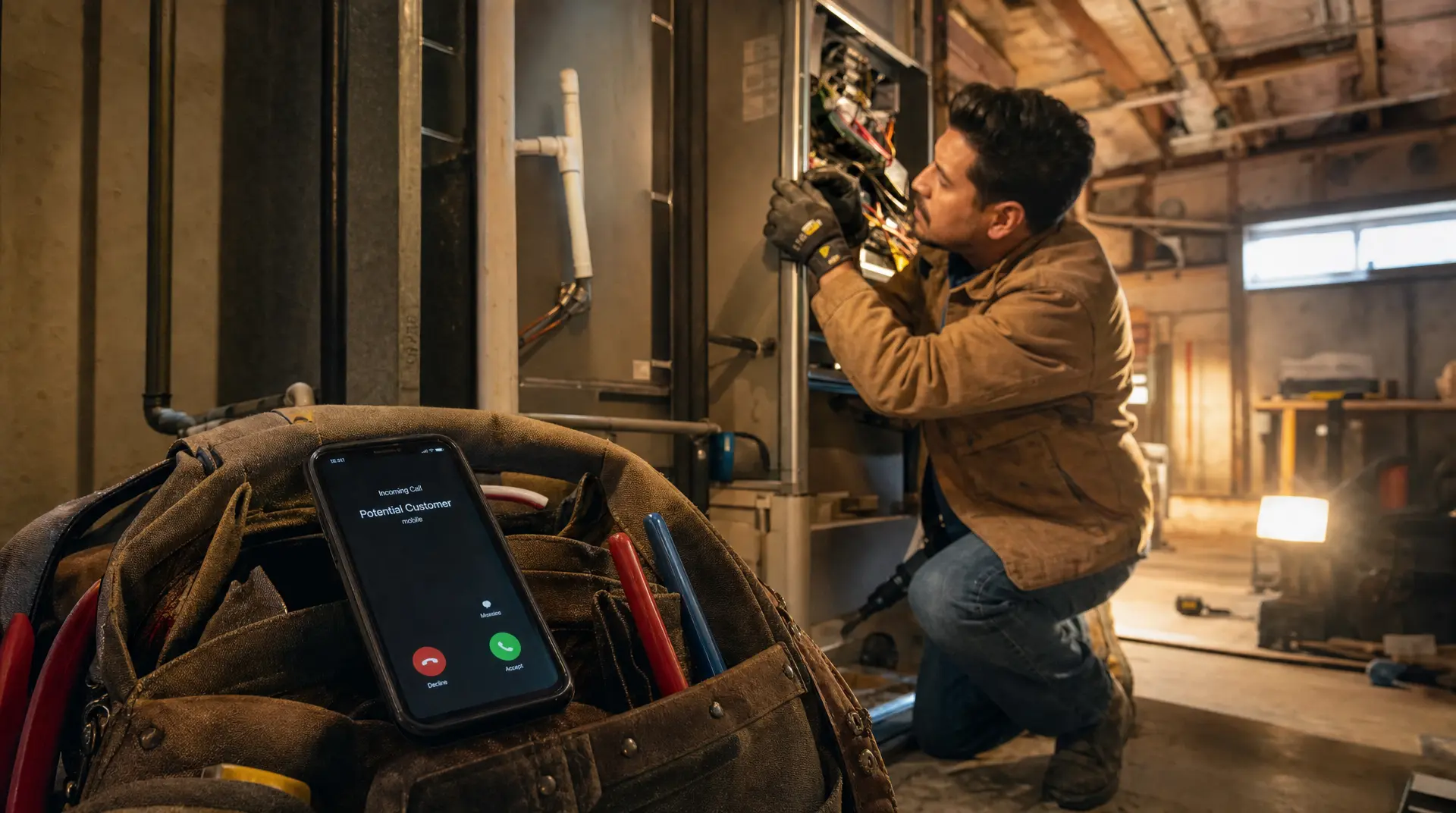
The phone number is buried. The contact button is small. The form is too long. The page has too many choices. A chatbot pops up. The customer hesitates. Then they go to the next company.
That is a conversion killer.
For urgent local searches, speed matters. Google and Ipsos found that more than 70% of consumers say directions and a call button are important. The same research showed smartphone users regularly look for business hours, directions, and addresses. They are trying to solve something quickly. Your website should make that easy.
I'm big on human connection. Sometimes people just want to talk to people. That is especially true when they have a burst pipe, broken AC, or an electrical issue. If a stressed homeowner lands on a website and gets forced into some clunky automated flow, a lot of them will leave and call somebody else.
That is why I do not recommend chatbots for most local emergency service situations unless a human is truly behind it and can respond fast. A website should create systems in place that increase human interaction, not slow it down.
I also understand the reality of your day. You are not sitting at a desk waiting for leads. You are on job sites. You are driving. You are working with your hands. You are missing calls because you are busy doing the work.
So your site has to catch leads even when you cannot answer the phone. That means call and text options need to be obvious right away. It means the form should be short and easy. It means your service area and hours should be easy to find. In some cases, it makes sense to add a system that can answer calls and book appointments on your behalf.
The path to contact should feel effortless. Every extra click, every extra question, every extra second of doubt makes it easier for that lead to disappear.
5. Your Website Is Too Broad, Too Stale, and Too Weak on Local Trust
This is the quiet killer a lot of owners miss.
The website exists. It is live. It has your logo. Maybe your nephew built it. Maybe you built it yourself. Maybe an agency launched it and disappeared. On the surface, nothing looks broken. Under the surface, it is underperforming every day.
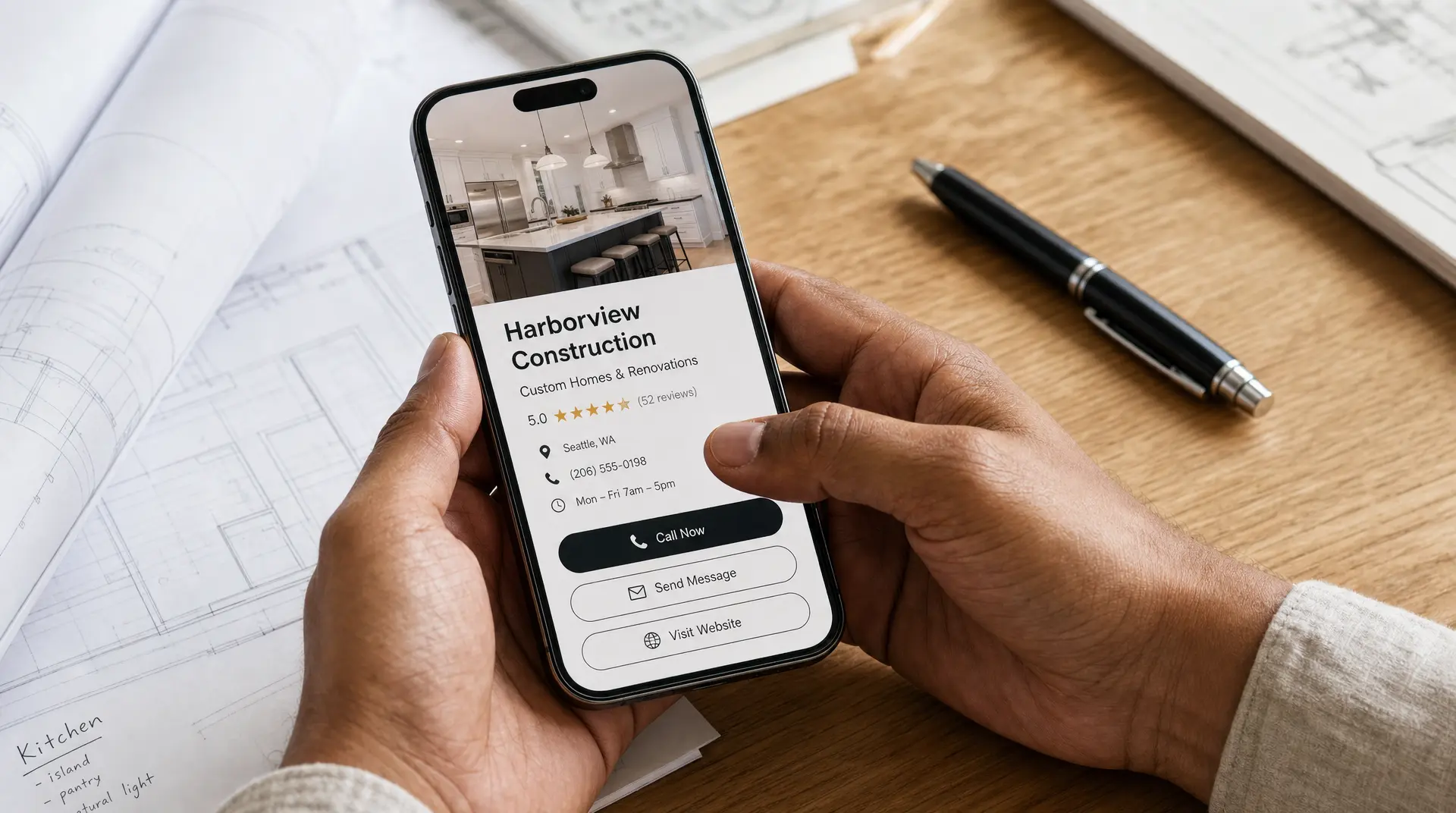
The homepage says you do everything. The service pages barely mention the cities you serve. Reviews are old. Project photos are outdated. Your Google Business Profile is half filled out. Your name, address, and phone number do not match everywhere online. Google has a weak signal. The customer has weak confidence.
Poor visibility usually comes from missing signals.
Google keeps local ranking pretty straightforward. Google says relevance, distance, and prominence drive local results. Google also says more reviews help local ranking. And when your Business Profile is complete, customers are 2.7x more likely to consider you reputable.
That matters before they even hit your website.
Reviews matter even more now. BrightLocal's 2026 survey shows that 97% of consumers read reviews for local businesses, 85% are more likely to use a business after positive reviews, and 54% visit the business's website after reading positive reviews. BrightLocal also found that 83% leave when asked.
So ask.
Ask right after the job while the customer is happy and the experience is fresh. Keep it organic and real. Most owners are leaving reviews on the table because they simply never ask.
I also push owners to get more specific. Generalists attract average clients. Specialists attract premium clients. If you want kitchen remodels, say kitchen remodels. If you want better landscaping jobs in a certain city, say that clearly. If you want to attract higher-end homeowners, your messaging should reflect premium craftsmanship and the exact areas you want to win.
I have seen over and over that small companies beat bigger competitors through precision. Big companies win on volume. Small companies win on relevance. High intent beats high budget.
This matters with ads too. A lot of owners spend money on traffic and think the ad is the problem. Usually the website is the leak. Big budgets amplify good systems. They do not fix bad ones. Same traffic can produce very different outcomes depending on the page it lands on.
And you cannot treat your website like a one-time project. It needs updates. It needs fresh photos. It needs sharper copy. It needs new reviews. It needs clear service pages. It needs someone watching what is actually converting. I see too many agencies build, deliver, and disappear. Six months later, the site is stale and the owner is wondering why growth feels slow.
The money leak gets big fast. If your average job is $500 and your site gets 1,000 visitors a month, a drop from a 5% conversion rate to 1% creates a silent $20,000 monthly gap. Most owners never see that number on a bill. They just feel it through slower growth, more price shoppers, and empty spots in the schedule.
What I Would Do Next

Check Your Site on Your Phone Today
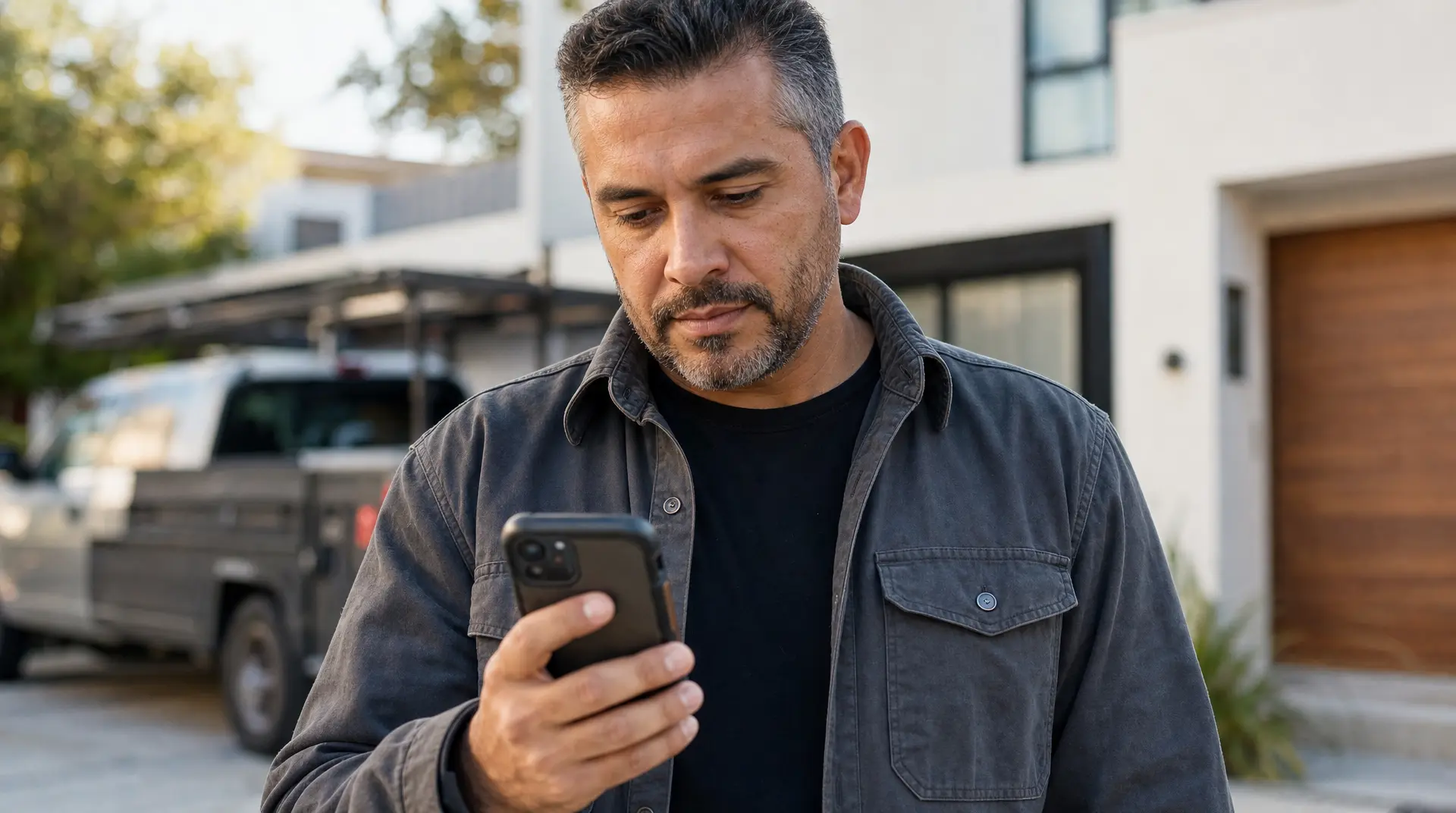
Open your own website on your phone and look at it like a buyer, not like the owner.
In the first few seconds, can you clearly tell what you do, where you work, and how to contact you? Does it load fast? Does it show real proof? Does it feel professional? Does it make you feel safe spending money with that company?
Those are the questions your customers are answering, whether they say them out loud or not.
If your site is vague, slow, generic, hard to contact, or stale, it is quietly costing you jobs. Most small businesses' websites don't fail because the business is bad. They fail because the website doesn't reflect the value of the business.
Why I Built WeGotSites This Way

This is exactly why I built WeGotSites. I wanted to bring in that enterprise feeling for these small businesses. I wanted to help them do what they do best and allow us to highlight what they do best. And I wanted to remove as much risk as possible.
Family businesses do not make decisions based on price alone. They make decisions based on risk, timing, and cash flow. They depend on that money to survive. That is why I do not believe a local business owner should have to gamble $3,000 to $10,000 upfront just to see if a website might work.
So I built a model around a free preview, zero upfront cost, and no contracts. You get to see the website first. You only move forward if you actually like it. That is how business should work.
The goal is simple. Help small businesses win online. Help them rank higher on Google, so Google can know they exist. Help them clearly show what they do. Help them convert better. Help them get more of the right jobs.
Small businesses deserve the same chance to win as anybody else.
Frequently Asked Questions
What happens to website leads if I miss the phone call while on a job?
You lose the job. People move fast. If you cannot answer, they call the next local competitor. Your website must have asynchronous capture, like a simple contact form or automated text system, to catch that lead while your hands are busy on a site.
Can I just offer a discount to get more 5-star reviews fast?
No. While 83% of consumers will leave a review simply because you asked, offering a financial incentive violates both Google and FTC policies. It can get your profile banned. Just ask organically immediately after the job is finished.
Does cheap web hosting actually hurt my ability to get leads?
Yes. Cheap hosting creates a slow mobile experience, which is a massive conversion killer. Google data shows 53% of mobile visitors leave if a page takes over three seconds to load. You need premium, reliable hosting to capture emergency jobs.
Should I list my exact pricing on my service pages?
Usually, no. Every home service job is different, and rigid prices attract tire-kickers. Instead, outline your quoting process or starting rates. This filters out cheap shoppers and sets a premium expectation. High-paying homeowners buy peace of mind and results, not just the cheapest task.
How often do I need to update my website so it keeps converting?
A website is not a one-time project. It needs continuous proof to build trust. You should hand off fresh before-and-after photos and new reviews monthly to a dedicated digital partner. If your site goes stale, prospects assume your skills are stale too. Keep it fresh without doing the work yourself.