![Don't Fall for Predatory Web Design Agencies [2026]](/blog/dont-fall-for-predatory-web-design-agencies-2026/og.webp)
Don't Fall for Predatory Web Design Agencies [2026]
Skip the $5,000 agency trap. Get a custom, done-for-you trades website with $0 upfront risk that captures emergency leads while you're on the job.
By George Suarez, Founder at We Got Sites
Five extra clients a month can change a family business.
That can cover payroll. That can help with tuition. That can take pressure off at home. That is why I care so much about this topic.
My whole career has been in tech, startups, and SaaS. I spent years helping mid-market and enterprise companies grow with systems, data, and technology. Then I kept seeing the same gap over and over. Bigger companies get the tools. Local businesses get overpriced agencies, weak DIY tools, or no real help at all.
When I talk to plumbers, contractors, landscapers, and other local operators, I do not shut off my tech brain. I just talk like a regular person. You do not need a lecture. You need to know one thing fast. Is your website helping you get more calls, more quotes, and better jobs?
Small businesses make up 99.9% of all firms in the United States. From 1995 through 2024, they created 61% of net new jobs. Around 26.1% of employer firms are family-owned. So when a bad agency drains money from a local business, it hurts more than a homepage. It hits families, employees, and whole communities.
This is personal for me. I grew up without a lot of resources. I had to work harder for opportunities that some people just wake up with. That stayed with me. It is a big reason I built WeGotSites and why I care so much about making technology and resources accessible for everyone.
To be fair, some agencies do amazing work. Premium pricing can make sense for bigger companies or businesses already doing strong revenue. I am talking about the agencies that sell that same model to local service owners who cannot afford a bad bet.
Key Takeaways
- Because the median small business operates with only 27 cash-buffer days, traditional web agencies charging large upfront retainers create severe financial risk for local operators.
- While 97% of consumers read local business reviews, a 2026 BrightLocal survey indicates that 66% of these users require further website research before booking.
- Lead-generation websites loading in one second convert three times better than sites loading in five seconds, making hidden mobile page bloat a primary cause of lost revenue.
- Web design agencies frequently trap local service businesses by withholding domain control, despite ICANN policies granting registrants explicit rights to manage and transfer their web properties.
- According to Google research, 76% of location-based smartphone searches lead to a business visit within one day, emphasizing the critical need for fast mobile website performance.
- Local service websites must pass a 30-second test by immediately displaying clear service offerings, geographic service areas, and authentic project photos to establish buyer trust.
- WeGotSites eliminates traditional web development risk for local businesses by providing custom-coded platforms with zero upfront costs, no long-term contracts, and a free 20-minute visual preview.
Why This Hurts Local Business Owners so Much

Most family businesses do not have room for a failed $5,000 experiment.
The median small business has only 27 cash-buffer days in reserve. One out of four has fewer than 13 days. So when an agency asks for $3,000 to $10,000 up front, that is not a casual decision. That money may have been meant for payroll, equipment, groceries, or keeping the month calm.
And the pressure is real right now. In the Federal Reserve's 2025 report on employer firms, 75% said rising costs were a financial challenge, 56% said paying operating expenses was hard, and 51% said cash flow was uneven. A lot of owners used personal funds or cash reserves just to keep moving. Price matters, of course. Risk is usually what stops the decision.
At the same time, a lot of owners are trying to do all the marketing themselves. BrightLocal's 2025 survey of U.S. SMB owners and managers found only 40% had a dedicated business website, only 35% had a Google Business Profile, and 54% said the owner manages marketing alone. So you have people running jobs, answering phones, quoting work, paying bills, and then trying to learn websites at night. That is exactly when predatory agencies slide in with polished decks and bad incentives.
How Predatory Agencies Trap Good Businesses
They Get Paid Before You See Value

This is the first red flag I look for.
A lot of agencies protect themselves first. They collect a large upfront fee. They put you on a monthly retainer. Then they ask you to trust the process. If the website underperforms, you carry the stress and they already got paid.
That model breaks the way most local owners think. A trade business ties money to outcomes. Materials lead to jobs. Equipment helps the crew work. Fuel gets you to the customer. The old agency model asks you to send money into a black box and hope it turns into results later.
That is why I built my own model differently. I put myself in their shoes and remove as much risk as possible. Family businesses do not make decisions based off price alone. They make decisions based off risk, timing, and cash flow.
They Charge Custom Prices for Generic Thinking
This happens all the time.
The sales call sounds great. The proposal looks sharp. The word "custom" gets thrown around a lot. Then the site goes live and it feels like every other contractor, plumber, or landscaper in the area.
Templates are common. Charging custom prices for generic thinking is where the problem starts.
I've seen a contractor pay $6,000 for a website sold as custom, only to later realize it looked almost identical to a competitor's. That is why I tell owners to stop asking, "Is this custom?" Ask, "Where does the customization actually happen in your process?" That question gets to the truth fast.
If you want to pressure-test an agency, ask to see three recent websites in your industry. Then ask them to explain why each one is different. If the answer is weak, you are probably looking at pre-built decisions with your logo on top.
And for local service businesses, that gets expensive in a quiet way. Cookie-cutter sites make you feel replaceable. Then you end up competing on price instead of value.
They Lock You Into Systems You Do Not Control
This one drives me crazy because it hurts owners long after the sales call is over.
Your domain is your identity. It is your name on the internet. Hosting is what puts that name online. SSL is the security that helps protect the site and your visitors. These are simple things, but a lot of owners never get a plain-English explanation. That confusion creates leverage for the wrong agency.
The biggest issue is domain control. ICANN says registrants have rights to manage and transfer their domain. You should know who owns it. You should know where it is registered. You should know how to move it if you ever need to leave.
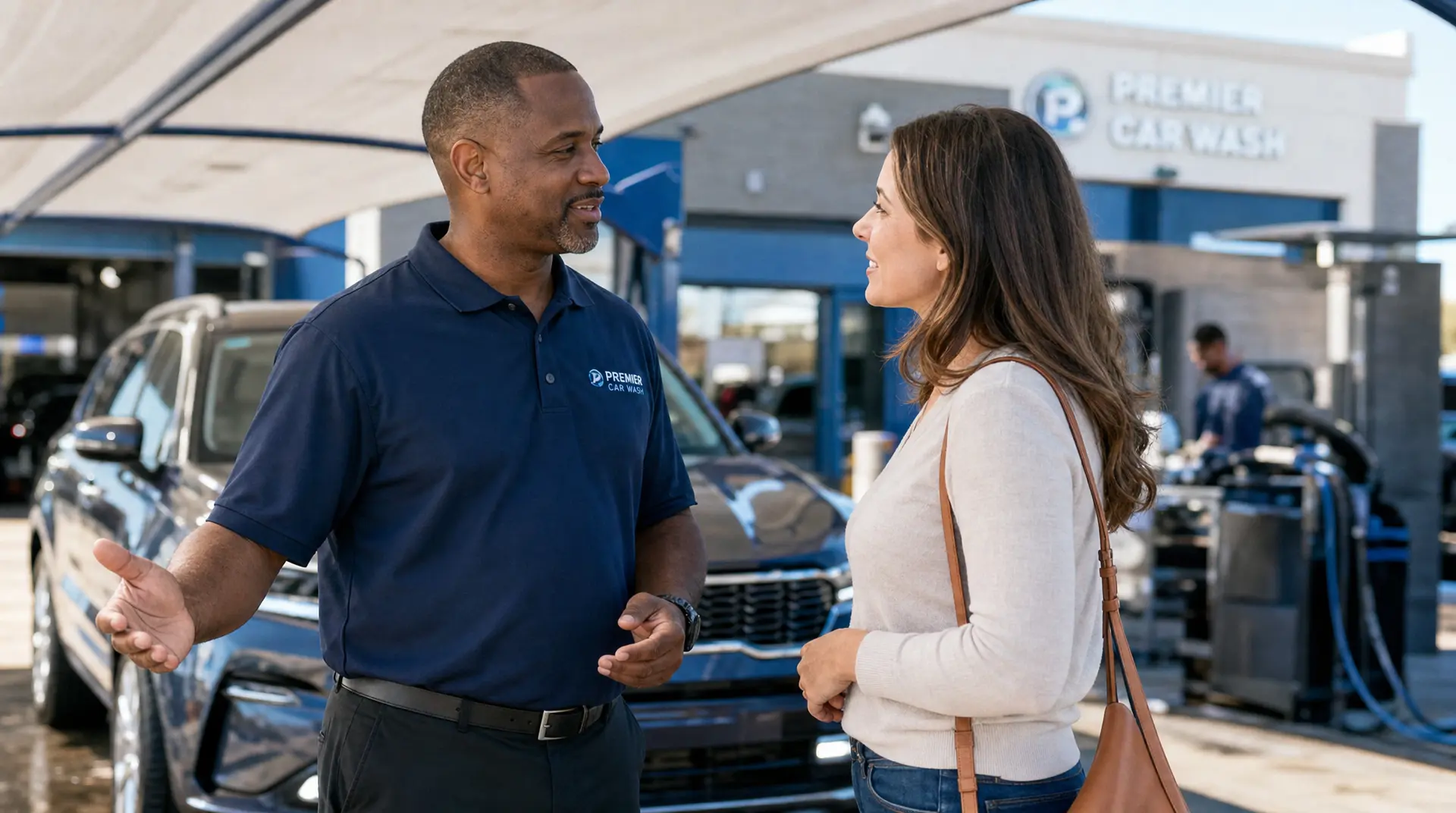
I worked with a car wash company that had an outdated website they had been locked out of for five years. Five years. The site was old, the owner did not have real control, and the whole thing was devaluing the business. We rebuilt the site from scratch and removed all the upfront risk. But the bigger lesson is simple. If an agency can trap you, they can keep charging you after the value is gone.
You should also know if SSL, backups, and uptime protection are included. Those are basics. They should never feel mysterious.
They Launch and Disappear
A website should be treated like a living sales tool.
It needs updates. It needs fresh photos. It needs sharper copy over time. It needs someone watching how people actually use it. Most agencies sell pages, design, and features. Most business owners care about calls, leads, and revenue.
When an agency treats launch day like the finish line, the owner gets left with a site that slowly gets stale. Reviews never get added. Service areas change. Photos stay old. The business grows, but the site stays frozen.
That is how owners lose money without realizing it. Nothing looks broken. The site just quietly underperforms.
How Your Customers Actually Choose Now

A lot of owners still say, "We've always lived off word of mouth."
Honestly, that is a good sign. Relying on word of mouth for so long is amazing because that usually means you do great work. But the market changed. Before, referrals were enough. Now referrals trigger research.
If someone got a referral, they probably got two or three other referrals too.
BrightLocal's 2026 survey found that 97% of consumers read reviews for local businesses, and the average consumer checks six different review sites. After reading positive reviews, 54% visit the business's website. That same survey also found that 66% keep researching after seeing positive reviews, while only 34% are ready to book or buy right away.
That means your reviews do not finish the sale. They send people to the next step. Your website has to carry the rest.
I've felt this in my own life. After moving to a new city, I had friends recommend barbers to me. I still passed on some of them because I could not find photos online that showed the quality of their cuts. The referral got my attention. The missing proof created doubt.
Your customers do the same thing with home services. They are not reading every word on your site. They are scanning it for a feeling. Can you solve the problem? Are you in their area? Do you feel safe to trust with their home and money?
That is why I push the 30-second rule so hard. People should clearly understand what you do immediately in the first 30 seconds. They should know how you fix the problem and how to contact you. They should also see real proof. Real project photos. Real reviews. Real signs that this is a real business.
Your story matters too. It just comes later. If the first thing on the homepage says "family-owned since 1998," you have skipped over the buyer's first question. They still want to know what you do, why you are better, and what to do next. Clarity builds trust faster than history.
For premium jobs, this matters even more. High-paying homeowners do not choose the best contractor on paper. They choose the one they feel most confident hiring. They want confidence, not bargains. Speak about outcomes, not services. Show proof, not promises.
Mobile, Speed, and the Silent Killer
Most local buyers are looking you up on a phone. 91% of U.S. adults own a smartphone. So for a local service business, your website is living in somebody's hand, often when they need help fast.
And local intent moves quickly. Google's mobile-local research found that 30% of mobile searches are tied to location, 76% of nearby smartphone searches lead to a visit within a day, and 28% result in a purchase. That is why speed to lead matters so much. If you are on a job site and cannot answer the phone, the website still has to help capture that lead.
Now look at speed. When load time goes from 1 second to 7 seconds, the chance of a bounce jumps by 113%. Portent found that a lead-generation site loading in 1 second converted three times better than one loading in 5 seconds, and five times better than one loading in 10 seconds.
Same traffic. Very different outcomes.
This is why I keep saying speed is not some technical side issue. It affects trust, conversion, and whether your ads work. A lot of owners blame traffic or ads when the real problem is the website. The page leaks attention before the customer ever calls.
A big reason is hidden bloat. The median mobile page now makes 68 total requests. That includes scripts, fonts, images, and builder junk most owners never notice. Then the site looks "fine" on desktop in the office, but loads slowly on a phone in the real world.
This is also why I do not get excited by every feature. Sliders, animations, pop-ups, stock photos of people shaking hands, and chatbots can all add friction. Sometimes websites that are over-engineered hurt you more than they help you. A simple website helps people decide. A complex website makes them think.
And in local service, too much thinking means one thing. They leave.
The DIY and "My Nephew Built It" Cycle

I hear this all the time: "My nephew can build me a site on Wix for free."
Maybe he can. But if it has not been built in the last six months, there is a good chance it is not getting built in the next six months either. And even when a DIY site does go live, the problems usually show up slowly.
The design feels off. The photos are not optimized. The message is vague. The page takes too long to load. The site never really looks better in Google's eyes. Then three to six months go by and the owner starts wondering why growth feels stuck.
That is the part a lot of people miss. DIY does not fail all at once. It fails slowly until the owner stops believing in it.
And while that is happening, the owner is burning time. You are a contractor, a plumber, a landscaper, a business operator. You get home tired. You want to spend time with your family. Trading that time for design tinkering is expensive, even when the tool looks cheap.
What to Ask Before You Sign Anything
Ask Who Owns What

Ask who owns the domain. Ask where the site is hosted. Ask if SSL, backups, and uptime monitoring are included. If the answers sound vague, keep digging. You should never feel confused about your own online identity.
Ask Where the Custom Thinking Happens
Do not settle for the word "custom." Ask the agency to show you where the strategy changes from business to business. Ask why one plumbing site is different from another. Ask why the layout, message, proof, and calls to action match that specific buyer journey.
If they lead with design and struggle to explain strategy, that tells you a lot.
Ask What Happens if the Website Does Not Convert

This question exposes incentives fast.
If the conversion rate is weak after launch, what happens next? Do they refine the copy? Do they improve the layout? Do they test new proof? Do they look at mobile friction? Or do they just say the project is complete?
You want a partner who sees the site as an ongoing growth tool.
Ask How They Protect Your Rankings During a Rebuild
If you already have a site, even a weak one, it may still have pages that rank.
That matters. Google says major site changes can affect rankings while the site gets re-crawled, and it also says 301 and 302 redirects do not cause PageRank loss when a site move is handled correctly. So if an agency is rebuilding your site, they should have a real plan for preserving what already works.
At WeGotSites, we use in-house audit systems to find existing keyword-ranking pages, rebuild them properly, and redirect traffic where it needs to go. I will not share the secret sauce behind every workflow. I will say this: any agency touching your site should take migrations seriously.
Ask How They Think About Reviews and Google Visibility
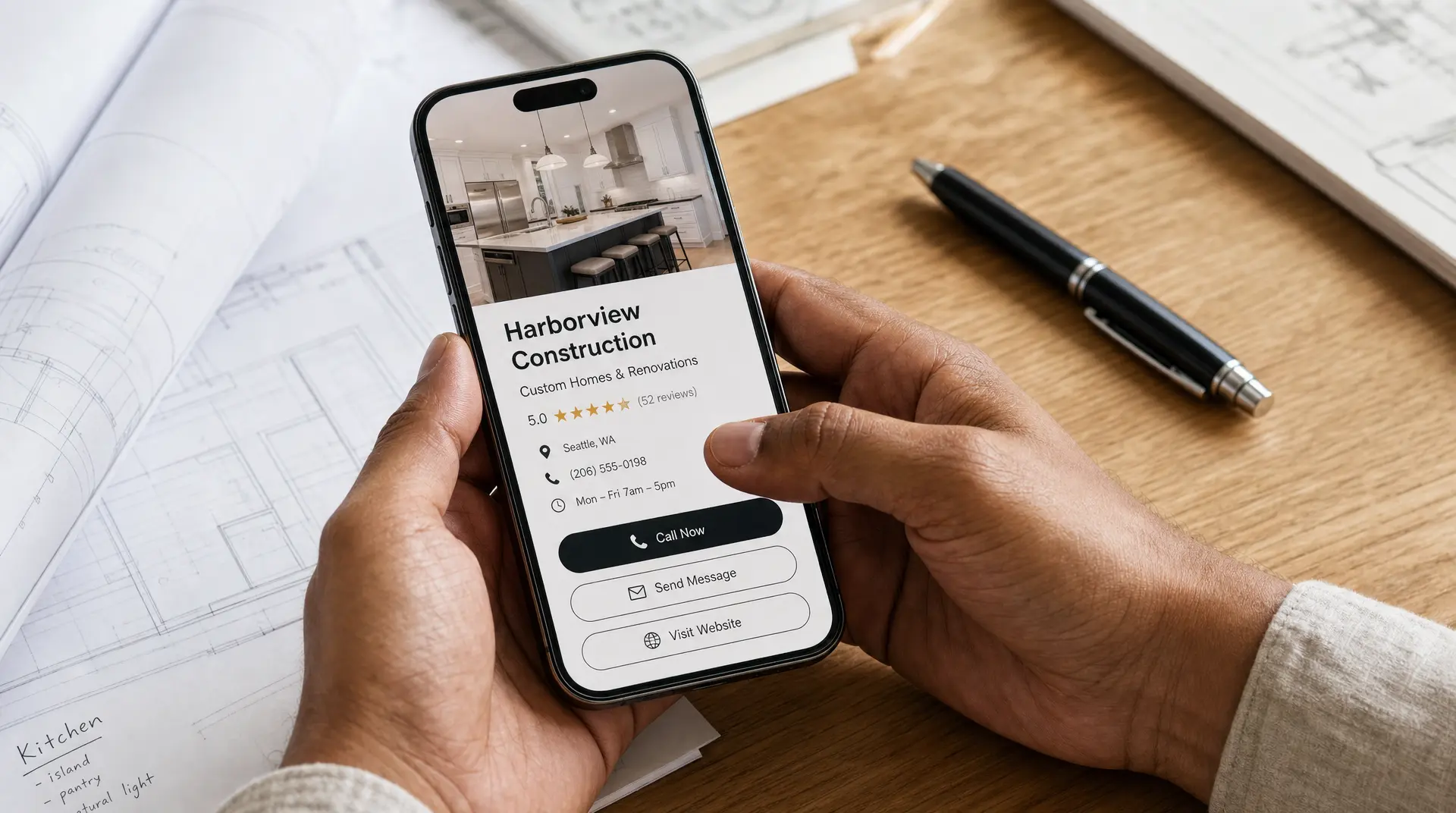
Google says local ranking mostly comes from relevance, distance, and prominence. That means your site and profile need to clearly signal what you do, where you do it, and why you can be trusted.
And your reviews matter a lot. BrightLocal's 2026 survey found that 47% of consumers will not use a business with fewer than 20 reviews, 74% look for reviews written in the last three months, and 31% will only use a business with 4.5 stars or higher. A good agency should be helping you think through that. Google is not hiding your business. It just does not understand it still.
Why I Built WeGotSites Differently
I built WeGotSites because I was tired of seeing local owners forced into bad choices. One path was paying a traditional agency thousands up front and hoping for the best. The other path was dragging together a DIY site and losing months.
I did not want either of those to be the answer.
So I built a done-for-you service for local businesses with $0 upfront cost, no contracts, and a free website preview before anyone pays a dollar. If the owner likes it, we launch. If they do not, they do not pay. That removes the fear that usually kills the decision. It also lets owners judge real work instead of a sales pitch.
We custom-code our websites because I want more control over speed, changes, and performance. We build mobile-first. We keep the layouts focused. We use real proof. We make contact easy. We give unlimited text and photo updates because businesses change and the website should keep up.
Most owners do not want to log into a platform and risk breaking their own layout. They want to send a text. They want to send a voice note. They want someone to handle it. That is the type of partner I believe they deserve.
And yes, that preview-first model works. Our personalized 20-minute website previews convert at a high rate because owners can finally see something made for them before they risk anything.
Final Word

Predatory web design in 2026 got more polished.
The proposals look better. The language sounds smoother. AI can make a weak agency look smart for an hour. The incentives still matter more than the pitch.
If the agency gets paid before you see value, if the work feels generic, if you do not control your domain, and if nobody can clearly explain how the site will help you get more calls, step back.
You deserve better.
You deserve a website that matches the quality of your work. You deserve something that passes the 30-second test, helps you rank higher on Google so Google can know you exist, and gives customers confidence fast. Most of all, you deserve a partner that earns your business every month instead of locking you in and continuing to get rich off you at any expense.
Small businesses deserve a chance to win. I believe that deeply. That belief is behind every website I build.
Frequently Asked Questions
How do I find out if I actually own my company's domain name?
Search your URL on a WHOIS database. ICANN rules state the registrant owns the domain. If the agency put their name there, they hold your digital identity hostage. Demand your registrar login today. You must have total control of your internet name.
Are multi-year website contracts normal for home service businesses?
No, they are a trap. Predatory agencies use long-term contracts to guarantee their revenue while delivering zero ongoing value. Your business changes constantly, and you shouldn't be locked into a stagnant site. A true digital partner earns your money every single month without forcing you into legal handcuffs.
How much upfront money should a local contractor pay for a website?
Ideally, nothing. The average small business only holds a 27-day cash buffer. Handing $5,000 to an agency before seeing any real work is reckless. Look for partners who build the site first, let you preview it, and charge a flat, predictable monthly fee only if you like the result.
Will I lose my local Google rankings if I fire my current web agency?
Not if the migration is handled properly. Google confirms that proper 301 redirects preserve your PageRank. Predatory agencies use fear of lost rankings to keep you trapped. A competent partner will map your keywords, redirect old URLs, and protect the local traffic you've already built.
Why do some expensive agency websites actually lose emergency service leads?
They over-engineer them with heavy templates. For emergency trades, speed is everything. Google data shows that if mobile load times jump from 1 to 7 seconds, bounce rates spike 113%. When a homeowner has a burst pipe, they won't wait for flashy animations. They just leave and call your competitor.